
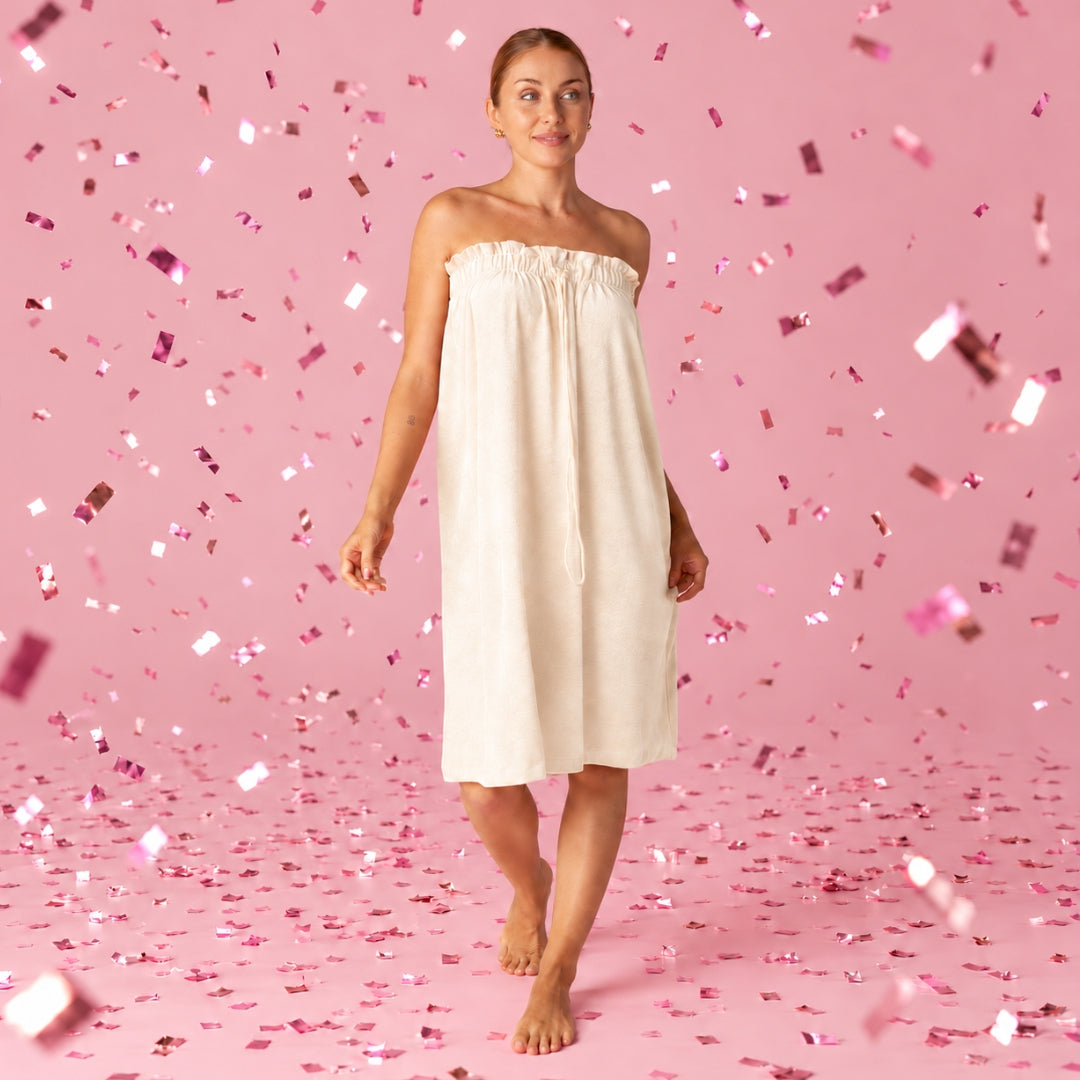


We believe a uniform should be chosen for how the work actually happens. Nail work is done seated, leaning in close, for hours at a time, and everything you use lands in your lap rather than on your sleeves. Acrylic dust, gel, pigment, monomer, filings. Most nail technicians buy a better tunic when what they needed was a better apron. So we make both, cut for seated close work, in fabrics that shed dust rather than hold it. Tailored, sizes 4 to 26.
In this article
- What makes nail work different?
- Why the apron matters more than the tunic
- Which fabric handles dust and pigment?
- What should you look for in a seated fit?
- Which colour works best in a nail salon?
- Which styles suit nail technicians?
- How do you get gel and pigment out?
- Questions we're often asked
What makes nail work different?
Three things, and together they invert the usual uniform priorities.
You are seated. Almost every other role in this industry stands. A tunic that hangs beautifully upright can bunch at the waist, gape at the chest or ride up at the back the moment you sit down and lean forward.
Everything falls into your lap. Acrylic dust from filing, gel that drips off a brush, pigment, glitter, monomer. Gravity puts all of it on your thighs and the front of your torso, not on your sleeves, not on your shoulders.
You are very close to the client. Closer than in almost any other treatment, for the whole appointment, at eye level. What you are wearing is inspected in a way a massage uniform never is.
So the priorities reorder. Lap protection first, fabric surface second, seated fit third. Shoulder freedom, which dominates hairdressing and massage, barely registers here.
Why the apron matters more than the tunic
Because the apron takes almost all of the damage, and it costs a fraction of what it protects.
A nail technician's tunic usually fails at the front, at lap height, from product that lands there. An apron sits exactly in that zone. Over a year it will save you at least one garment, probably several, and it costs less than one of them.
Two shapes, and the choice is genuinely about how you work.
The Mia Linen Half Apron sits at the waist and covers the lap. For most nail work this is the right answer, because it protects exactly where product lands, without adding a layer across your chest in a warm salon.
The Lulu Linen Apron gives full front coverage. Worth it if you also do pedicures, where water and product come at you from a lower angle, or if you work with a lot of pigment.
Both have front pockets, which matter more than they sound. Mid-set, you do not want to turn away from a client's hand to reach for something.
Both are organic linen-cotton, which washes hard and softens rather than degrading, the practical answer for something that gets laundered constantly.
Which fabric handles dust and pigment?
Look for a smooth, tightly woven face. Acrylic dust behaves like very fine hair, settling into texture and staying there.
A brushed, waffled or knitted surface holds dust in the weave, so it survives a wash and gives the garment a permanently dulled look. A tightly woven performance fabric lets it brush off or rinse out.
Our Signature fabric is 92% polyester with 8% spandex, woven with a smooth face. It sheds dust and it holds up to the daily washing this work demands.
Pigment is the harder problem. Gel pigment and glitter stain permanently on most fabrics, and there is no fabric that solves it entirely, which is the argument for an apron rather than a better tunic.
Black is bleach resistant across our range, which matters more than nail technicians expect. Salon disinfectants and acetone-adjacent products strip colour from standard blacks over time, and a uniform that has gone patchy at the front looks worse than one that is simply old.
What should you look for in a seated fit?
Test the garment sitting down, not standing up. Four checks.
Does the neckline gape when you lean forward? You spend the appointment leaning in over a client's hands, with them sitting directly opposite. This is the most visible fit failure in nail work.
Does it bunch at the waist when you sit? A straight-cut tunic often does. A shaped waist sits better in a chair.
Does the back ride up? Longer-line tops solve this, which is why we cut ours longer than a standard tunic.
Can you reach comfortably across a table? Nail work is done at arm's length in front of you rather than overhead, different from most of the industry, and worth checking.
Sleeve length is a real decision here. Long sleeves collect dust on the forearm and get in the way of close work. Most nail technicians choose short sleeve or sleeveless, though coverage remains a personal preference worth asking about if you are ordering for a team.
Which colour works best in a nail salon?
Black is the default and it works, with one caveat, because it shows acrylic dust more than any other colour. If you file a lot, you will be brushing yourself down.
Charcoal or mid grey is the most practical choice for a heavy acrylic salon. It hides dust far better than black without looking casual.
Neutrals such as oatmeal, cinnamon and chocolate suit a nail bar with a natural or boutique feel, and they hide dust well. They show pigment more, which is another argument for the apron.
One salon-specific note. Your uniform sits in the client's eyeline for the whole appointment, right next to the colour they are choosing. A neutral or dark uniform lets the nail colour be the thing they look at.
Which styles suit nail technicians?
The full range is in Nail Salon Uniforms, our largest collection. These suit seated work best.
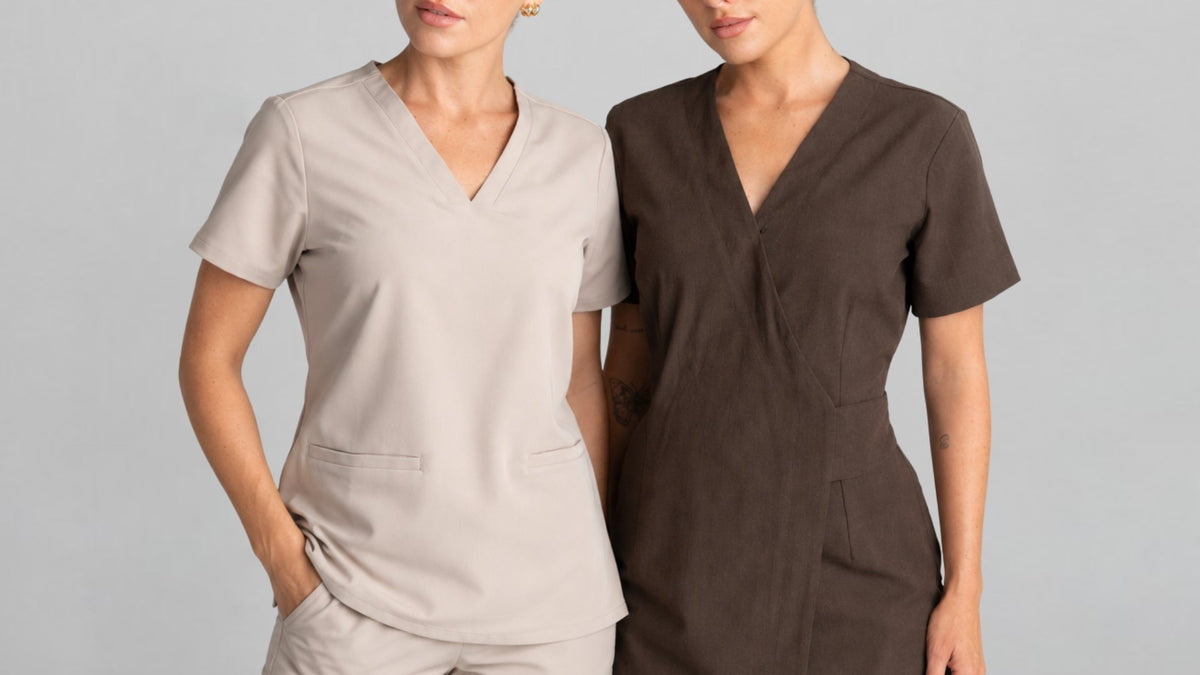
Spa Uniform 14, an abstract V-neck and cap sleeves, nothing to drag across a table. Five colourways including Charcoal and Dove Grey.
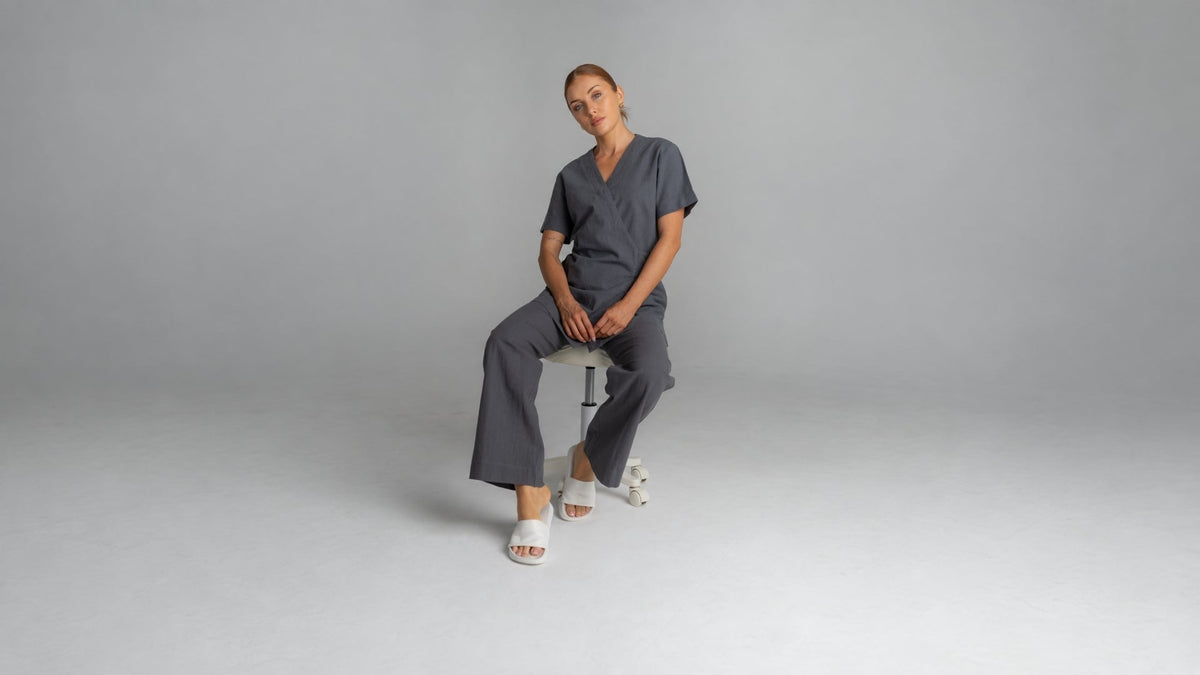
Spa Uniform 12, a wrap front with a secure back tie, so the neckline holds its position when you lean.
Spa Uniform 09, a higher round neckline, the most conservative option for close seated work.
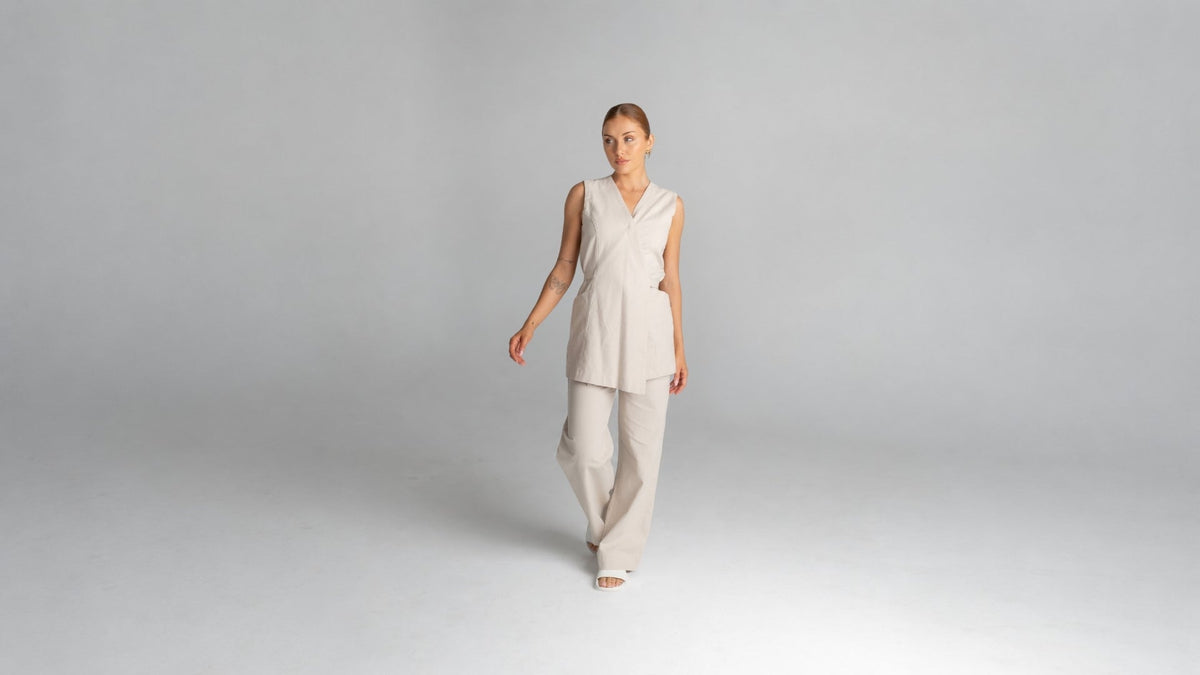
Spa Uniform 17, sleeveless, for warm salons and anyone who wants nothing on their forearms.
Bottoms. Long Pants year-round, or Capri Pants in summer.
Aprons. The Mia Half Apron first, the Lulu if you do pedicures too.
If you offer pedicures, the pedicure bowl range is worth a look alongside, because a copper bowl changes how the whole treatment reads.
How do you get gel and pigment out?
Honestly, often you do not, which is why the apron matters. But three things help.
Act immediately with cold water. Never warm. Warm water opens the fibre and helps a pigment set.
Blot, do not rub. Rubbing pushes pigment deeper into the weave and spreads it.
Do not let uncured gel cure. If gel lands on fabric, keep it away from the lamp and any strong light, and treat it before it hardens. Once cured, it is mechanically bonded and will not come out.
For general uniform care, meaning washing separately from towels, skipping fabric softener, and washing cold, see what actually ruins a uniform.
Questions we're often asked
What do nail technicians wear to work?
Most nail technicians wear a short-sleeve or sleeveless tunic with tailored pants, plus an apron. Because nail work is done seated with product falling into the lap, the apron does most of the protective work, and the tunic mainly needs a smooth face that sheds acrylic dust and a neckline that stays put when leaning forward.
Do nail techs need aprons?
Yes, and it is the highest-value item in a nail technician's uniform. Acrylic dust, gel, pigment and monomer all land in the lap, which is exactly where an apron sits. A half apron costs a fraction of a tunic and will usually save at least one garment a year.
What fabric is best for a nail salon uniform?
A tightly woven fabric with a smooth face. Acrylic dust behaves like very fine hair and settles into texture, so brushed, waffled or knitted surfaces hold it permanently while a smooth performance weave lets it brush or rinse away.
What colour uniform is best for nail technicians?
Charcoal or mid grey is the most practical in a salon doing a lot of acrylic, because it hides dust far better than black while still looking professional. Black is the common default but shows dust most. Neutrals suit boutique nail bars and hide dust well, though they show pigment.
How do you get gel polish out of a uniform?
Treat it immediately with cold water, never warm, and blot rather than rub. Keep the garment away from lamps and strong light so uncured gel does not cure, because once cured it bonds mechanically to the fibre and will not come out. This is the main argument for wearing an apron.
Should nail technicians wear long or short sleeves?
Short sleeve or sleeveless suits most nail work, since long sleeves collect dust on the forearm and get in the way of close detailed work at a table. Coverage is a personal preference though, and teams are better served by offering a choice of sleeve within one style and colour.
Browse Nail Salon Uniforms, Linen Aprons and Pedicure Bowls, tailored sizes 4 to 26.

Why Most Uniforms Fail in a Hair Salon
Why Massage Asks More of a Uniform Than Any Other Treatment