
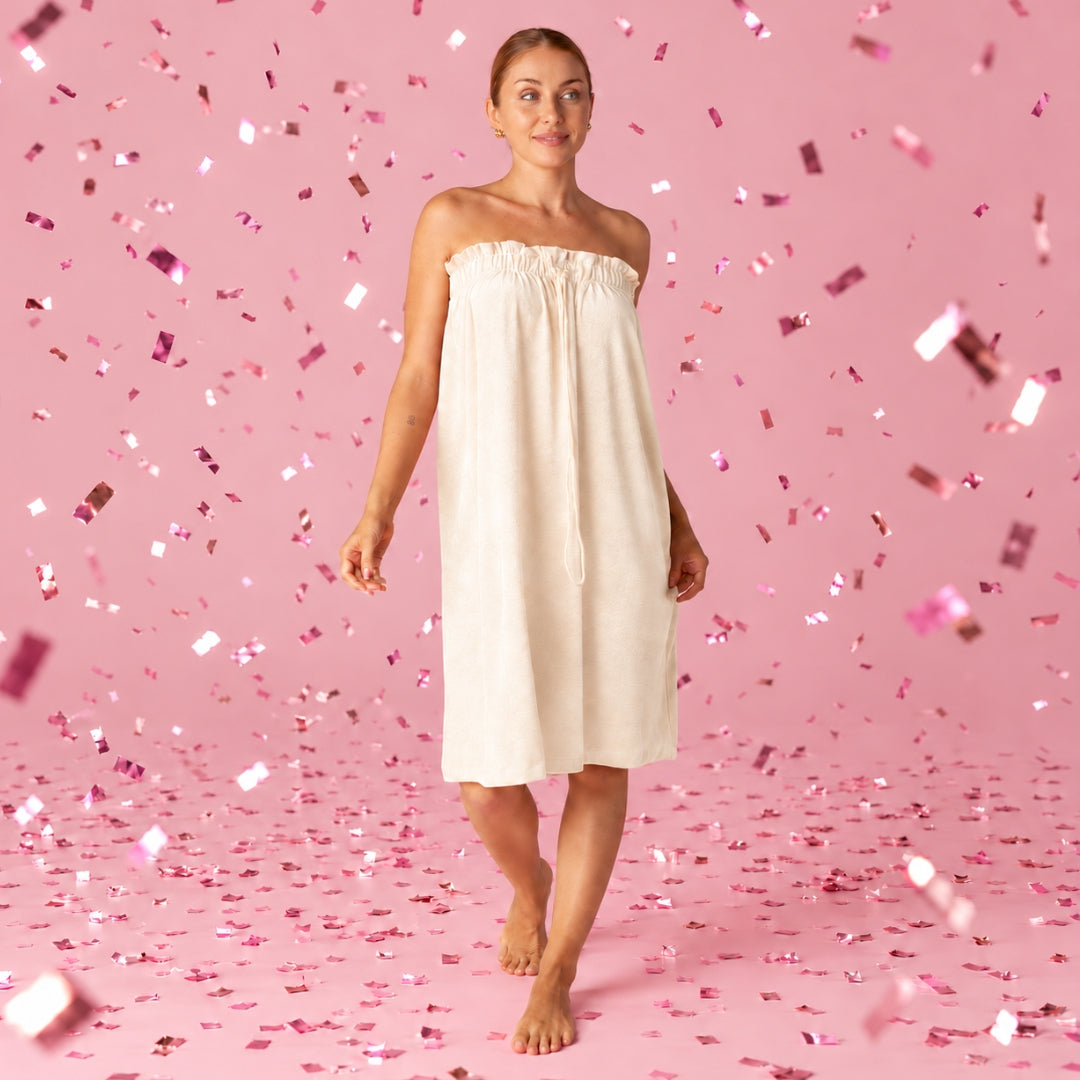

We believe you should be able to think about the client rather than the temperature. Treatment rooms are kept warm on purpose, for the person lying down, undressed, not moving. You are the one working in it, and by February in most of this country that becomes genuinely uncomfortable. The fabric you choose is the only variable you control, and most of what is marketed as breathable is not. Here is what actually moves heat away from you.
In this article
- Why does a treatment room feel hotter to you than the client?
- What does breathable actually mean?
- Which fabrics genuinely breathe?
- Does colour make a difference?
- How do you build one uniform for both seasons?
- Which styles suit an Australian summer?
- Questions we're often asked
Why does a treatment room feel hotter to you than the client?
Because you are doing the work and they are not.
A treatment room is set for someone lying still, often undressed, often under a towel or blanket. That temperature is correct for them. You are standing, moving, sometimes leaning with your body weight, for an hour at a time, fully dressed.
Add the equipment. Steamers, wax pots, hot stones, heated beds, LED and laser units, hooded dryers. Most of it produces heat, and treatment rooms are usually small with limited air movement, often deliberately, because a draught ruins a massage.
Then add an Australian summer on top. A room that is comfortable in July can be unbearable in February even before you turn anything on.
You cannot lower the room temperature without compromising the treatment. The uniform is the variable.
What does breathable actually mean?
Two different things, and most marketing conflates them.
Air permeability, meaning whether air can move through the fabric. This is about weave density more than fibre.
Moisture management, meaning what happens to sweat. Here the fibre matters enormously.
Synthetic performance fabrics manage moisture by wicking, moving sweat along the fibre surface to the outside to evaporate. It works, and it is why activewear is synthetic. But polyester itself absorbs almost no moisture, so once you sweat faster than it can evaporate, which happens quickly in a warm, still room, it sits against your skin.
Natural fibres work differently. Flax and cotton absorb moisture into the fibre itself. Linen can hold a substantial proportion of its own weight in moisture before it feels damp against the skin. That buffer is the whole difference in a treatment room, where there is not enough air movement for evaporation to keep up.
Flax fibre is also hollow, which means air moves through it and heat conducts away from the body rather than being held against it. This is why linen has been worn in hot climates for thousands of years and polyester has not.
So a performance fabric is better for a gym. A natural fibre is better for a warm room with no airflow. Most uniform marketing borrows the activewear language without the airflow that makes it work.
Which fabrics genuinely breathe?
Organic linen-cotton. The best option for heat, and the reason our linen range is what most therapists reach for in summer. Real flax rather than the faux linen used across the rest of the market, and faux linen is polyester woven to look like flax, so it has the appearance without any of the thermal behaviour. In a warm room that difference is immediate.
A quality performance blend. Our Signature fabric is 92% polyester with 8% spandex. It manages moisture well, dries fast, and resists product and oil better than a natural fibre. It is the right answer if durability and stain resistance matter more to you than pure comfort in heat.
What to avoid. Anything heavy, anything with a brushed or fleecy back, anything lined, and, perversely, thick faux linen, which combines polyester's thermal behaviour with the visual promise of something cool.
One test that costs nothing. Hold the fabric up and see whether you can see light through the weave. Denser is warmer.
Does colour make a difference?
Indoors, far less than people think.
Black absorbs more radiant heat than white, which matters in direct sunlight. Inside a treatment room with artificial light, the effect is negligible, because fabric weight and fibre matter enormously more than colour does.
Where it does matter is if you work near a window, in a room with skylights, or if you are mobile and moving between cars and houses. There, a lighter colour genuinely helps.
Otherwise choose colour on the practical grounds that apply year-round. Black conceals product between clients, neutrals suit natural rooms, and consistency across a team matters more than either.
How do you build one uniform for both seasons?
Layering, rather than two separate wardrobes.
Australia is not one climate. A therapist on the Gold Coast in February and one in Hobart in July need different things from the same uniform, and buying two full sets is expensive and makes a team look inconsistent across the year.
The system that works looks like this.
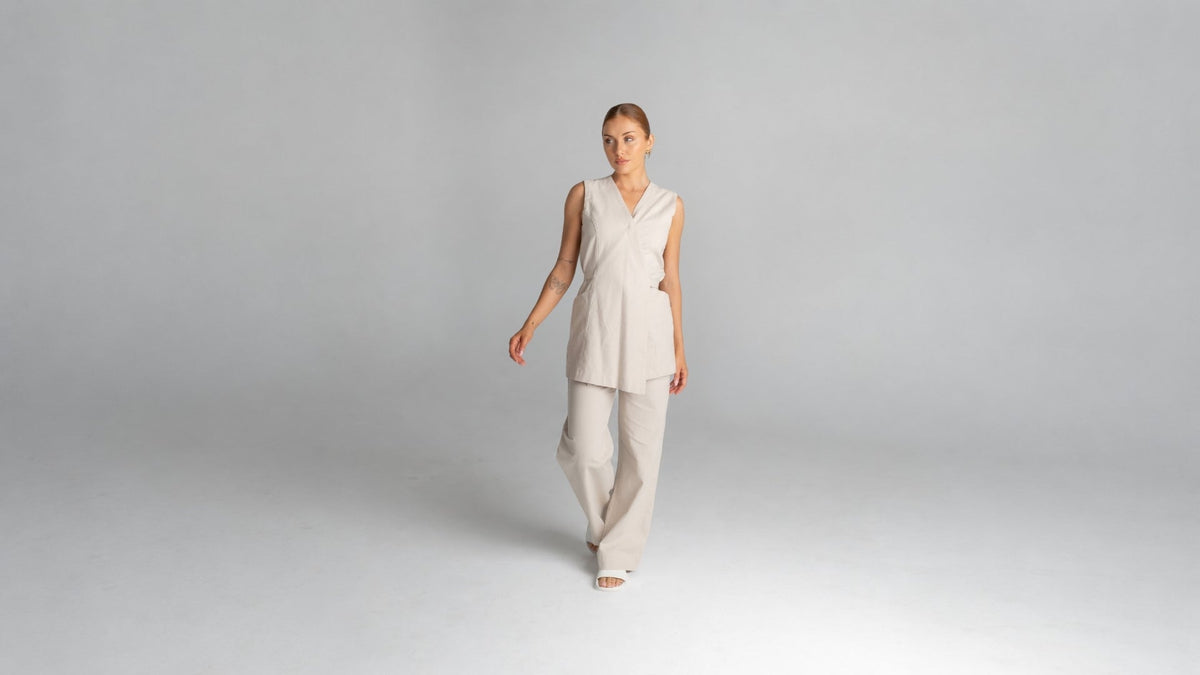
A breathable tunic as the constant. Sleeveless or short sleeve, in linen-cotton. This is what you wear all summer on its own.
A base layer underneath for cooler months. One long-sleeve layer extends every tunic you own into winter without changing the silhouette a client sees.
Bottoms that suit both. Capri Pants through summer, Long Pants the rest of the year, cut in the same size range so the fit stays consistent.
The result is one visual identity year-round, which is what a uniform is for.
Which styles suit an Australian summer?
Fleur Linen Tunic, sleeveless, organic linen-cotton, split sides. The coolest thing we make and the summer default for massage and body work.
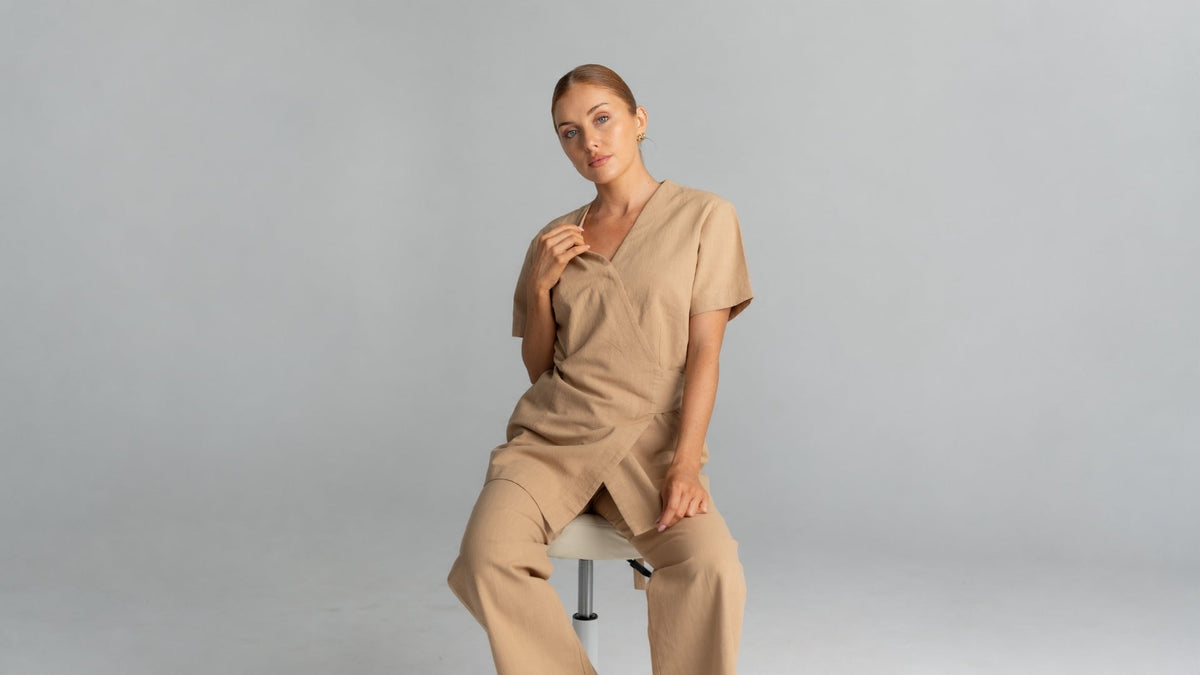
Eden Linen Tunic, a short sleeve wrap in the same fabric, for anyone who wants shoulder coverage.
Spa Uniform 17, sleeveless in our Signature fabric, for salons that need the durability.
Ava Linen Dress, a single breathable layer, which is why it suits a front desk in summer.
Bottoms. Capri Pants, or Willow Linen Pants for a full linen set that softens and ages together.
A note on the bed as well as the uniform. Your client is under linen in a warm room too. Microfibre spa bedding that dries in about seven minutes is what lets a clinic change sheets more often through summer without running out.
Questions we're often asked
What is the coolest fabric for a salon uniform?
Organic linen-cotton. Flax fibre is hollow, so air moves through it and heat conducts away from the body, and it absorbs a substantial amount of moisture before feeling damp. Synthetic performance fabrics manage moisture by wicking it to the surface, which needs airflow to work, and treatment rooms usually have very little.
Is linen or polyester better in hot weather?
Linen, in a warm room with limited air movement, which describes most treatment rooms. Polyester wicks moisture to the fabric surface for evaporation, so it performs well where there is airflow and poorly where there is not. Polyester resists oil and product better and lasts longer, so many teams run both.
Does a black uniform make you hotter indoors?
Barely. Black absorbs more radiant heat in direct sunlight, but inside a treatment room under artificial light the difference is negligible compared with fabric weight and fibre type. Colour only matters if you work near windows or skylights, or travel between locations.
How do you stay cool working in a treatment room?
Choose a natural-fibre tunic in a light weight, go sleeveless or short sleeve where you are comfortable doing so, and avoid anything brushed, lined or heavy. The room temperature is set for the client lying still, so the uniform is the main variable you control.
Do I need separate summer and winter uniforms?
No. A breathable tunic worn alone in summer and layered over a long-sleeve base layer in winter covers most Australian climates, and keeps one consistent look across the year. Two full wardrobes cost more and make a team look inconsistent between seasons.
Browse Linen Uniforms, Spa Uniforms and Spa Bedding, tailored sizes 4 to 26.



Why Medi-Spa Uniforms Have to Sit Between Clinic and Spa
Christmas Scrubs That Still Look Professional