

We believe a uniform should match what a business is actually selling. A medi-spa sells clinical results, needling, peels, laser and injectables, inside a room designed to feel calm. Dress that team like a day spa and clients quietly question the expertise. Dress them like a hospital and you have thrown away the reason someone chose you over a clinic. The answer sits between the two, and getting it right is a branding decision as much as a practical one. Tailored, sizes 4 to 26 in uniforms and XS to 4XL in scrubs.
In this article
- Why is medi-spa the hardest room to dress?
- What does a uniform signal to a medi-spa client?
- Scrubs or tunic, how do you choose?
- Why most medi-spas end up running both
- What does the fabric need to do?
- Which colours work in a medi-spa?
- Which styles suit medi-spa teams?
- Questions we're often asked
Why is medi-spa the hardest room to dress?
Because the business is deliberately two things at once, and the uniform has to hold both.
Medi-spa is the fastest-growing part of this industry, and it grew by combining two propositions that used to be separate. Clients want the results of a clinic, measurable, evidence-based, delivered by someone qualified. They also want the experience of a spa, because the alternative is a fluorescent-lit consulting room and they are paying a premium not to be there.
Every other part of your business already balances that. The room is calm but the equipment is visible. The language is warm but the consultation is thorough.
The uniform is usually the last thing anyone thinks about, and it is the most visible signal in the room.
Get it wrong in one direction and a client wonders whether you are qualified to be putting a needle near their face. Get it wrong in the other and they wonder why they are paying spa prices for a medical appointment.
What does a uniform signal to a medi-spa client?
More than in almost any other setting, because the stakes for the client are higher.
Someone booking a facial is buying an hour. Someone booking injectables, laser or needling is letting a stranger alter their face. They are looking for reassurance, and they will take it from whatever is in front of them.
A scrub reads as clinical competence. It carries an association with medical training that a tunic does not, and in this context that association is doing real work.
A tunic reads as considered and personal. It says this is a treatment, not a procedure, which is the whole reason a client chose a medi-spa over a clinic.
Neither is wrong. What matters is that the choice is deliberate and matches the treatment being delivered, and that your whole team reads as one business rather than as several.
Scrubs or tunic, how do you choose?
Work through the treatment list rather than the aesthetic.
Scrubs suit injectables, skin needling, medium and deep peels, laser and IPL, and anything involving a consent form. Also anything where you need to move quickly and change between clients.
A tunic suits facials, light peels, LED, dermaplaning, body treatments and consultations. Also front of house, where the first impression should be warm rather than clinical.
The dividing line, roughly, is that if the client is signing something or you are breaking the skin barrier, a scrub is doing useful work. If they are lying back to relax, a tunic is.
One practical consideration often decides it. Scrubs are easier to change out of. If your team runs a mixed day and needs to reset between an injectables appointment and a facial, that matters.
Why most medi-spas end up running both
Because the treatment list genuinely splits, and forcing one uniform across it means compromising somewhere.
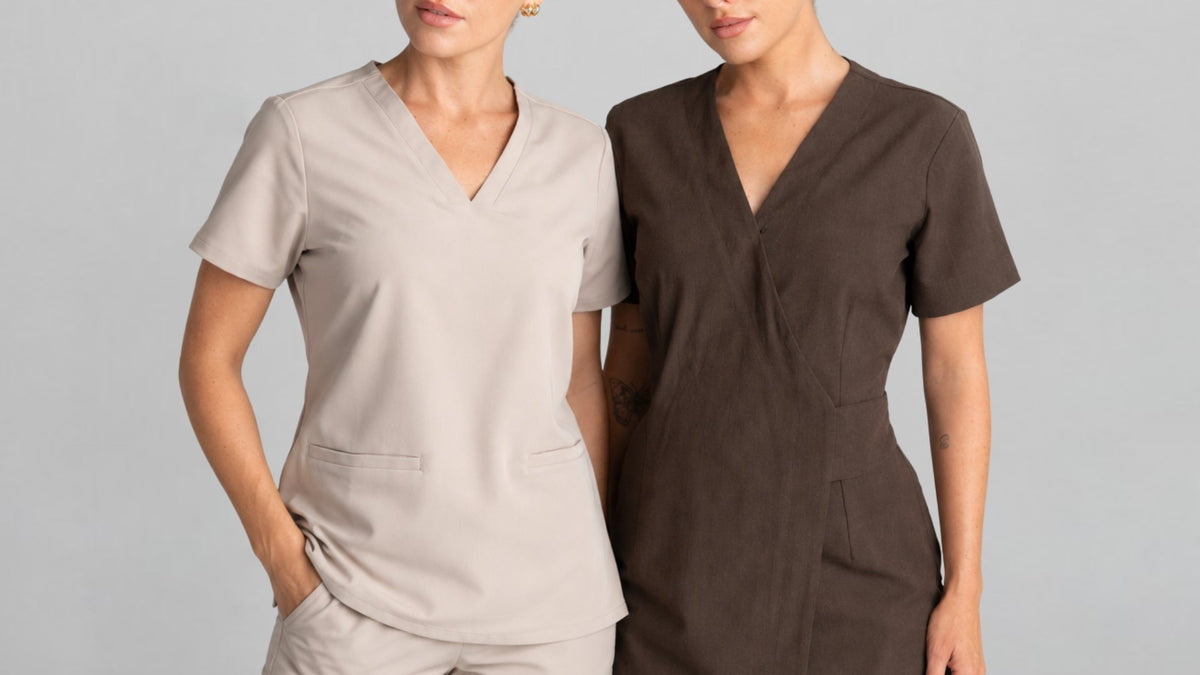
The common arrangement is scrubs for clinical treatment days, tunics for spa treatments and front of house. Nurses and dermal clinicians in scrubs, therapists and reception in tunics.
This works, but only if the two read as one business. Three things make that happen.
Coordinate the colours. Our SpringActive™ scrubs come in Oatmeal specifically so they sit alongside the linen range rather than clashing with it. Black scrubs with black tunics also works cleanly.
Keep the quality level consistent. A premium tunic next to a cheap scrub is more conspicuous than either on its own.
Do not let it map to hierarchy. If scrubs read as senior and tunics as junior, you have created a visible ranking in front of clients. Map it to the treatment, and say so.
What does the fabric need to do?
Medi-spa work is harder on fabric than it looks.
Frequent washing. Clinical work means changing more often, which is what kills most uniforms. Fabric needs to survive daily laundering without pilling, fading or losing recovery.
Product resistance. Peel solutions, prep alcohol, disinfectants and pigment all strip colour from standard fabrics. Our black is bleach resistant, which matters more in a clinical room than most people expect.
Movement without bulk. Injectables and needling are precision work at close range. Anything that restricts the shoulder or bunches at the elbow interferes.
Opacity. Thin fabric reads as cheap, and in a room where a client is assessing your professionalism it is the wrong signal.
Our SpringActive™ scrub blend costs roughly three times more per metre to manufacture than typical scrub fabric, buying a buttery hand, a matte finish, four-way stretch that recovers, and enough weight to hang properly. The reasoning is set out in why scrubs stopped being clinical.
Which colours work in a medi-spa?
Black is the safest and most common. Clinical without being cold, conceals product, photographs well, and works across both scrubs and tunics so a mixed team stays coherent.
Oatmeal is the interesting one for this segment. Warm enough to soften a clinical room, neutral enough to stay professional, and it bridges scrubs and linen better than anything else. Our strongest-selling SpringActive colour, and medi-spa is where it lands most.
Charcoal and navy read clinical and sit well in rooms with cooler lighting.
White reads most medical of all. Right if you want to lean clinical, wrong if the calm is what you are selling. It also demands a stricter replacement schedule.
Avoid pastels here. They read spa rather than clinic, and in a room where a client is deciding whether to trust you with their face, that is the wrong direction.
Which styles suit medi-spa teams?
Scrubs. The SpringActive™ Scrub Top and SpringActive™ Jogger Scrub Pants, in Black, Oatmeal or Burgundy, XS to 4XL. Browse the full Scrubs range.
Tunics. The Spa Uniform 19 is our best-selling style for medi-spa and clinical work, with a zip front, two pockets and an action back. The Spa Uniform 15 gives three-quarter sleeve coverage. The Spa Uniform 12 is the softer option.
Front of house. The Ava Linen Dress or an Eden or Avery tunic, so reception reads as hospitality rather than clinical.
Bottoms. Womens Long Pants pair with any tunic in the range.
Questions we're often asked
What do dermal clinicians wear?
Dermal clinicians generally wear scrubs for treatments that break the skin barrier, so needling, medium and deep peels, laser and injectables, and a tunic for facials, LED and consultations. Many medi-spas run both, coordinating the colours so scrubs and tunics read as one business.
Should a medi-spa wear scrubs or tunics?
It depends on the treatment. Scrubs signal clinical competence and suit anything involving a consent form or breaking the skin barrier. Tunics signal a considered, personal treatment and suit facials, body work and front of house. The dividing line is roughly whether the client is signing something.
What colour scrubs are best for a medi-spa?
Black is the safest and most common, clinical without being cold, and it works across both scrubs and tunics for a mixed team. Oatmeal suits medi-spas that want to soften a clinical room while staying professional, and it coordinates with linen uniforms. Avoid pastels, which read spa rather than clinic.
How do you dress a mixed medi-spa team?
Map the uniform to the treatment rather than to seniority, coordinate the colours across scrubs and tunics, and keep the quality level consistent, because a premium tunic next to a cheap scrub is conspicuous. If scrubs read as senior and tunics as junior, you have created a visible ranking in front of clients.
What size range do medi-spa uniforms come in?
Spring Spa Wear scrubs run XS to 4XL and the uniform range is cut as a tailored fit in sizes 4 to 26, rather than generic small, medium and large. Tailored grading matters in precision work because the garment has to move with you without bunching at the shoulder or elbow.
Do medi-spa uniforms need to be bleach resistant?
It helps considerably. Peel solutions, prep alcohol, disinfectants and pigment all strip colour from standard black fabrics, and a uniform that has gone patchy reads worse than one that is simply old. Bleach-resistant black holds its depth through the frequent washing clinical work requires.
Browse Scrubs, Beauty Salon Uniforms and Bleach Resistant Uniforms, scrubs XS to 4XL, uniforms 4 to 26.



Why Massage Asks More of a Uniform Than Any Other Treatment
Why Your Uniform Feels Hotter Than It Should in Summer