
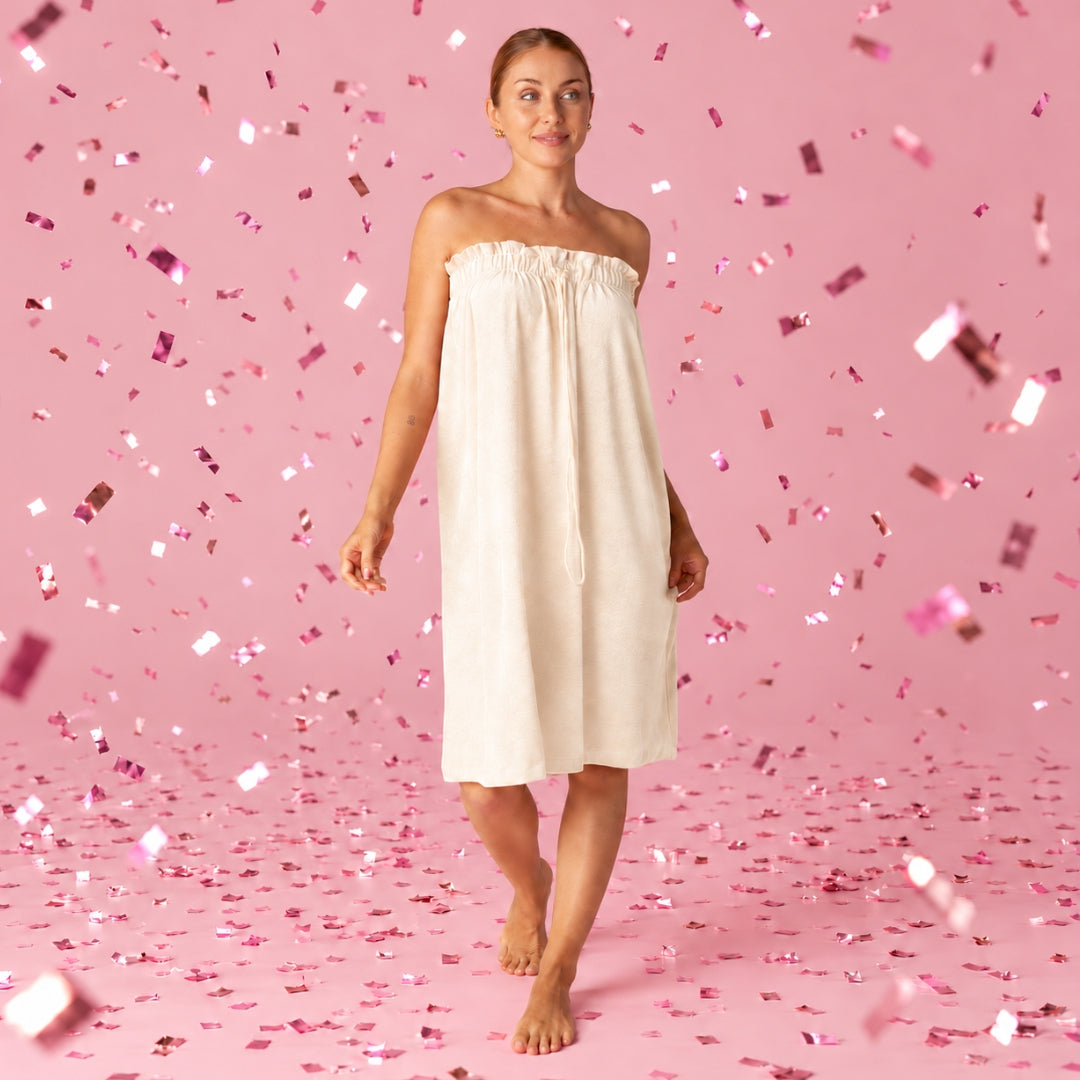

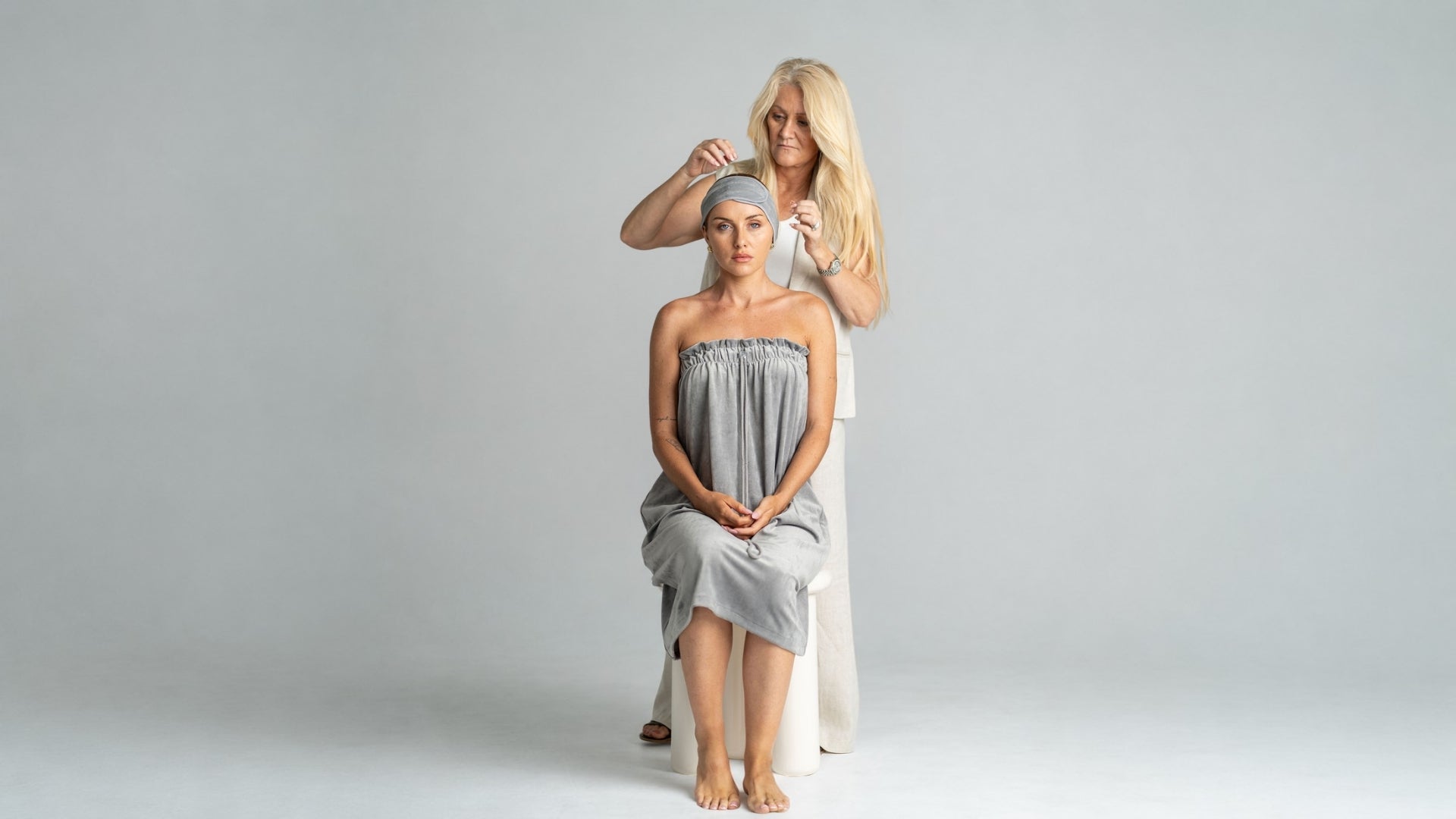
We believe what a client wears is part of what you sell. A treatment can be excellent and still be remembered for a thin, greying gown that gaped at the back, because the robe is the one thing a client wears for the entire appointment, and the only part of your room they take home an impression of on their own body. So we make robes and headbands for professional use, in plush velour that survives commercial laundering, in colours that suit a treatment room rather than a hotel bathroom.
In this article
- Why does the client robe matter more than owners think?
- What should you look for in a spa robe?
- Why do headbands need to be their own decision?
- How many robes and headbands does a treatment room need?
- What colour should client robes be?
- How do you keep robes looking new?
- Questions we're often asked
Why does the client robe matter more than owners think?
Because of how long it is worn, and how vulnerable a client is while wearing it.
Think about the sequence. A client arrives dressed, in control, looking how they chose to look. Then you ask them to undress and put on something you provided. From that moment until the end of the appointment, the only clothing they have is yours.
If it is soft, generous and clean, they relax. If it is thin, short, faded or does not close properly, they spend the treatment quietly managing it, holding it closed, adjusting it, aware of it. No amount of skill in the treatment itself undoes that.
It is also the detail owners defer longest. Uniforms get replaced because staff ask. Linen gets replaced because it stains visibly. Robes just quietly go grey over five years, and because you see them every day, you stop seeing them at all.
Here is a useful test. Would you be happy to be handed this robe, in this condition, at a spa you were paying full price at?
What should you look for in a spa robe?
Weight. A robe should feel substantial. Thin fabric reads as cheap immediately and reveals more than a client wants revealed. Plush velour has the weight and softness that makes a robe feel like part of the treatment rather than a covering.
Generous sizing. A robe needs to close comfortably on every client who walks through your door. A robe that fits some of your clients is worse than no robe, because the client it does not fit is the one who remembers it. Our robes come in Standard and Plus Size for exactly this reason.
Commercial laundering tolerance. A domestic robe is washed weekly. Yours is washed after every client. That is a completely different requirement, and it is where robes bought from a homewares store fail within months.
A belt that stays tied. Sounds trivial. Is not, when a client is face down on a bed.
Colour that holds. Oils, lotions and repeated hot washing all pull colour. A robe that has faded unevenly looks worse than one that was always a neutral tone.
Our Plush Velour Spa Robes come in twos, in Dove Grey, Oatmeal and Vanilla White.
Why do headbands need to be their own decision?
Because a headband fails in ways a robe does not.
It has to hold hair completely off the face through a facial, with no strands escaping into product, while being comfortable enough that a client forgets it is there. It has to work on fine hair and thick hair, on a client with a fringe and one without. And it goes through more washes than almost anything else you own, because it touches skin and product directly.
A stretched-out headband is one of the most common small failures in a treatment room. It slips mid-facial, the therapist has to stop and readjust it, and the client is pulled out of the treatment for a moment. It happens because headbands are bought once and then washed two hundred times.
Our Plush Velour Spa Headbands come in packs of six, in Blush Pink, Dove Grey, Oatmeal, Vanilla White and Black, deliberately, because you need more of them than you think and they should be replaced more often than a robe.
How many robes and headbands does a treatment room need?
Robes. At least three per treatment room, more if you run back-to-back appointments. One in use, one clean and ready, one in the wash. Add a plus size to every room's rotation, not just one for the whole clinic, because a client should never wait while someone fetches the right size from another room.
Headbands. A pack of six per room is a sensible starting point. They are used more often than robes, washed harder, and wear out faster.
The mistake is buying to the number of beds rather than to the number of appointments. A room doing eight facials a day needs a different number from a room doing three.
What colour should client robes be?
Match the room, not the trend.
Neutrals do the job in almost every setting. Dove Grey suits a contemporary or clinical room, Oatmeal a natural or warm one, and Vanilla White reads as classic and hotel-like, with the caveat that white shows everything and demands a stricter replacement schedule.
If your treatment rooms are dark, a lighter robe lifts the space and photographs better. If your rooms are already pale, a mid-tone robe stops the whole scene washing out.
One practical note. Whatever you choose, buy enough of one colour rather than a mix. Three robes in three colours look like a collection of leftovers. Three in one colour look like a decision.
How do you keep robes looking new?
Wash after every client. Not negotiable, and the reason set numbers matter.
Wash cool. Heat is what fades and flattens plush pile.
Wash robes with robes. Velour sheds a little, especially when new, and it will transfer onto uniforms.
Skip the fabric softener. It coats the pile and flattens it, which is precisely the opposite of what makes a plush robe feel plush.
Dry on low. High heat is what turns a soft robe into a stiff one.
Replace on a schedule, not on a crisis. Decide once a year whether your robes still pass the test above, and replace the whole set rather than the worst one. Mixed-age robes are how a room ends up with three tones of the same colour.
Questions we're often asked
What robes do spas use for clients?
Professional spas use robes made for commercial laundering rather than domestic ones, most commonly in plush velour for its weight and softness. The requirements are a generous fit across all client sizes, a belt that stays tied, colour that survives frequent hot washing, and enough weight that the robe does not feel thin.
How many client robes does a spa need?
At least three per treatment room, one in use, one clean and ready, one in the wash, with more for rooms running back-to-back appointments. Every room should have a plus size in its own rotation rather than sharing one across the clinic.
What are spa headbands made of?
Plush velour is the usual choice for professional spa headbands because it holds hair back firmly while staying comfortable against the skin through a full facial. Headbands wear out faster than robes, so they are generally bought in multi-packs and replaced more often.
How often should spa robes be replaced?
Review them annually and replace the full set rather than individual robes. Robes fade and flatten gradually enough that owners stop noticing, and replacing one at a time leaves a room with several tones of the same colour.
Should client robes match the salon's colour scheme?
They should suit the room rather than follow a trend. Neutrals work almost everywhere, because a lighter robe lifts a dark treatment room and a mid-tone stops a pale room washing out. Most importantly, buy enough of one colour, since a mix of colours reads as leftovers rather than as a choice.
Browse our Spa Gowns and Headbands, or see the Spa Bedding and Spa Uniforms that complete a treatment room.

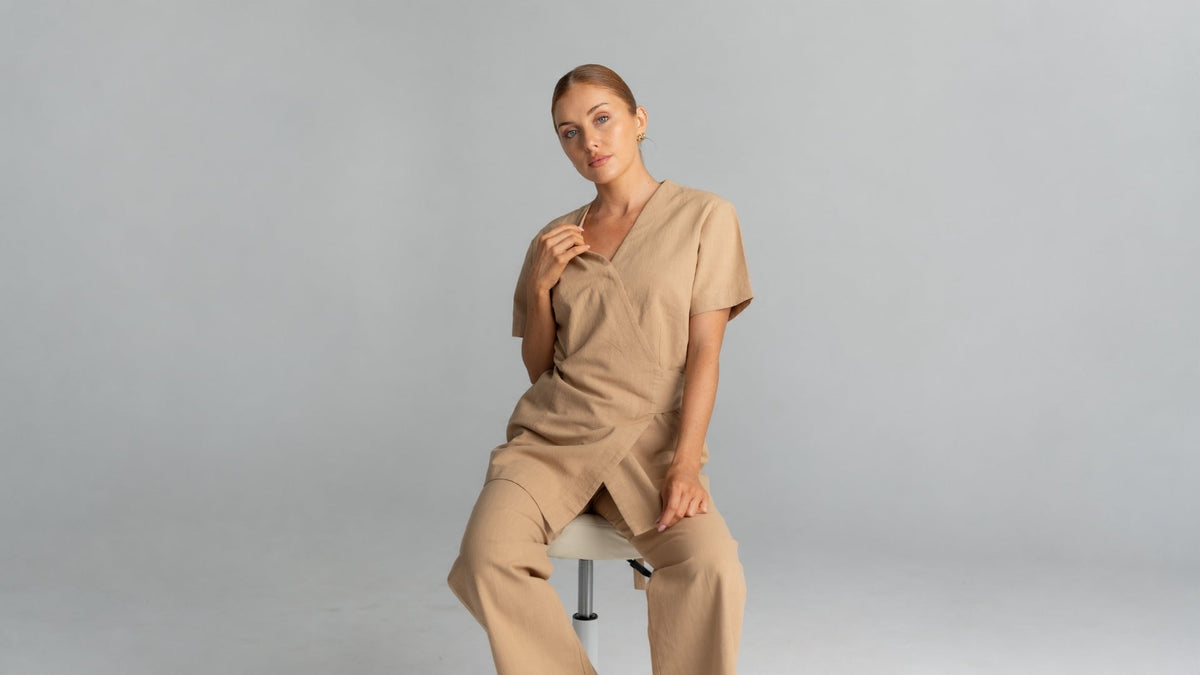


What to Replace in Your Salon Before the New Year
Why Copper Has Been Used in Pedicure Rooms for Centuries