We believe you should be able to see a uniform before you commit a whole team to it. Almost every uniform order that goes wrong goes wrong for the same reason, because someone chose from a screen, ordered for six people, and discovered the fit or the fabric was not what they expected. After tens of thousands of orders and years of running salons ourselves, the businesses that get it right all follow the same three steps. It is not complicated. It just has to happen in the right order.
In this article
- What is the right order to do this in?
- Step one, work out what you actually want
- Step two, order one and try it on
- Step three, order for the team, in one go
- Step four, if you want it, embroidery last
- Why three per person, always
- The three ways this goes wrong
- Questions we're often asked
What is the right order to do this in?
Four steps, and the sequence matters more than any single decision inside it.
- Decide what you want. Style, colour and fabric, based on the work your team actually does.
- Order one and try it on. Check the fit and the fabric while it is still in new condition.
- Order for the whole team, in one go. Three sets each.
- Then embroider, if you want your logo on it.
Almost every problem we see comes from skipping step two or moving step four earlier. Both are understandable, and both are expensive.
Step one, work out what you actually want
Start with the work rather than the look.
Write down what your team does across a week, so massage, facials, colour, nails, laser, body treatments, reception, then note which involve oil, tint, water, heat or arms raised. That list decides the fabric, and fabric is where most of the regret lives.
Then look at your room. A uniform should sit inside the palette that is already there, the timber, the paint, the light. And look at your team, at body shapes, coverage preferences, and whether you have men on staff who need to look like part of the same business.
The full process, including the questions worth asking any supplier, is in how to choose uniforms your team will actually want to wear.
Narrow it to one or two styles at this stage. Not five. You are about to try them on, and testing five is how a decision stalls for three months.
Step two, order one and try it on
This is the step people skip, and it is the one that saves the money.
Order one garment, in your own size, in the colour you are leaning toward. Then try it on properly, in front of a mirror, moving the way you move at work.
Keep it in new condition while you decide. Tags on, not worn to work, not washed. That way if the size or the style is not right, you can return or exchange it. Once a garment has been worn through a shift it is no longer returnable, so try it on rather than testing it on a client.
What to check.
Lean forward as if over a treatment bed or a client's head. Does the neckline gape? This is the most common fit failure and the one your team would manage all day if you got it wrong.
Raise your arms. Does it pull across the back? Does the hem ride up?
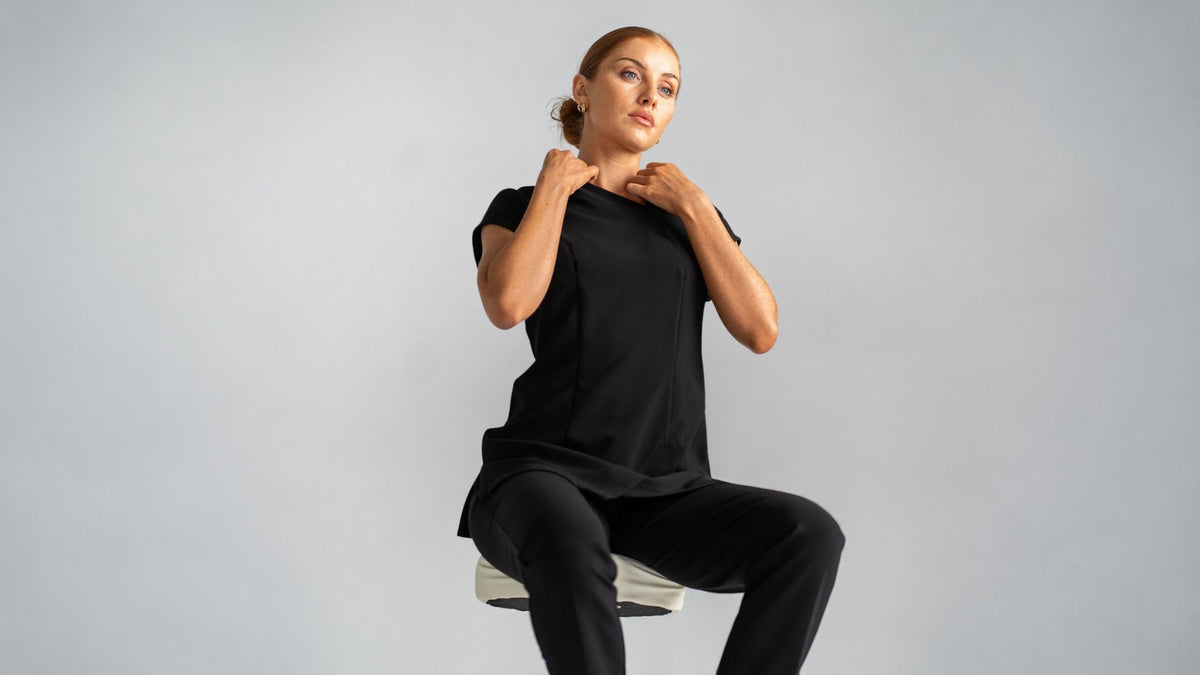
Sit down. A tunic that works standing can behave completely differently in a chair, which matters for nail and lash work.
Check the shoulder seam. It should sit on the edge of the shoulder, not out on the arm. If it has dropped, nothing below it hangs correctly.
Handle the fabric. Weight, hand and how it recovers when you stretch it are the three things a photograph cannot show you, and the three you will notice every day. Hold it up to the light to check opacity while you are at it.
That is genuinely all it takes. Ten minutes with the garment on tells you what six weeks of looking at product photographs will not.
One practical note. We take 10% off your first order automatically at checkout with the code Welcome10. It is there specifically so trying something costs you less than committing to it.
Step three, order for the team, in one go
Once you are happy with the fit and the quality, order everything at once. This matters for a reason that is not obvious.
Dye lots shift between production runs. Two garments in the same colour, ordered six months apart, will not be quite the same black. The difference is small and it is visible when two people stand next to each other, and it is the single most common reason a team stops matching.
So everyone, three sets each, one order.
Collect measurements rather than sizes. Bust, waist and hip. Dress sizing varies enormously between brands, and someone who is a 12 in one label is a 16 in another. Our range is cut as a tailored fit in sizes 4 to 26, and the chart is on every product page.
One thing worth handling gently. If anyone would rather not share measurements with a manager, let them order their own size directly. Nobody should have to disclose numbers to get a uniform that fits.
Order one style across the team. Colour can vary by role if you want it to. The silhouette should not, because repetition is what makes clothing read as a uniform rather than as staff clothing.
Step four, if you want it, embroidery last
We do not embroider, and it is a deliberate decision.
The moment a garment is embroidered it cannot be returned or exchanged. And sizing is the single most common thing that goes wrong with a team order, because someone guesses, or a person's size has changed, or a style fits differently from expected.
If we stitched your logo on before you had confirmed the fit, that garment is now unreturnable and unwearable. You have paid for something nobody can use, and we have made that impossible to fix.
So the order is this. Buy it, confirm every size across the team, then take the garments to a local embroiderer. Embroidery is inexpensive and quick, and doing it this way means the only garments carrying your logo are ones you already know fit.
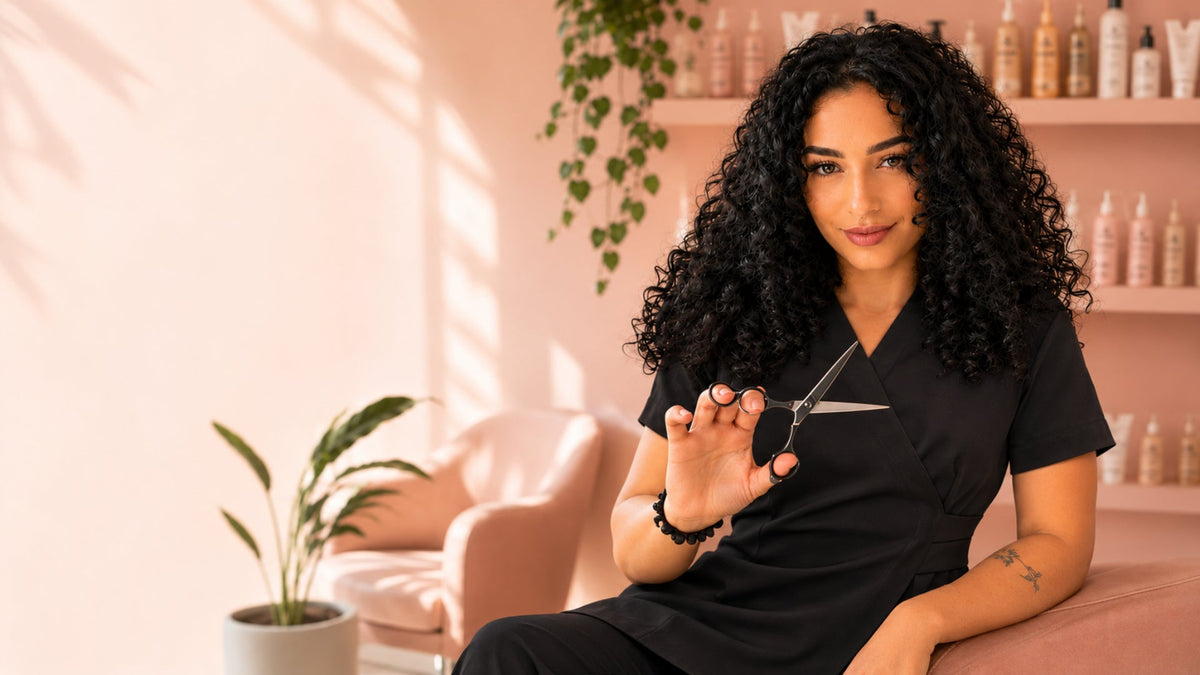
It is one extra step and it removes the risk entirely. It is exactly what Sara at Aria Curly Salon did. Her order arrived, she was happy with it, and then she had her logo added.
Why three per person, always
One worn, one in the wash, one clean and ready.
This is the most consistent piece of advice we give, and it comes from both sides, years of running salons and tens of thousands of orders since.
Two is where most people start, and it fails the first week a load does not dry. It also means every uniform is worn every second day, so the whole set wears twice as fast.
Three is the working minimum. Four is worth it for anyone doing back-to-back days, working across two locations, or working mobile.
There is a second reason beyond logistics, and it is the one people underestimate. Rotating evenly across three sets means they fade at the same rate. Everyone has a favourite garment. Wearing it disproportionately means it ages faster than the others, so a person's own uniforms stop matching each other, and then the team does.
The arithmetic on this, including why a cheaper uniform bought twice is not cheaper, is in why the cheaper uniform usually costs more.
The three ways this goes wrong
Ordering for the team without trying one first. The expensive one. If the fit or fabric is not right, you have six people in something nobody wants to wear, and returning a full team order is a considerably bigger job than returning one garment.
Embroidering before confirming fit. Turns a fixable sizing problem into an unfixable one.
Buying one set now and more later. Guarantees the range drifts. The second order will not match the first, and the fix is replacing everything.
All three come from the same instinct, moving faster than the process allows. Trying one on adds a few days. Getting it wrong costs a season.
Questions we're often asked
How should I order uniforms for my salon team?
In four steps, in order. Decide the style and fabric based on the work your team does. Order one and try it on, keeping it in new condition while you decide. Then order for the whole team at once, three sets each, using measurements rather than dress sizes. Arrange embroidery last, after every size is confirmed.
Should I order a sample uniform before buying for my team?
Yes, always. Fabric weight, hand and stretch recovery cannot be judged from a photograph, and fit issues like a gaping neckline only appear when you lean forward. Keep the sample unworn and unwashed with tags on so it can be returned or exchanged if it is not right, because returning one garment is straightforward and returning a full team order is not.
Can I return a uniform if the size is wrong?
Yes, provided it is in new condition, so unworn, unwashed and with tags attached. That is why we recommend trying a sample on rather than wearing it through a shift, and why we do not embroider garments before you have confirmed the fit.
Why should a whole team's uniforms be ordered at once?
Because dye lots shift between production runs. Garments in the same colour ordered months apart will not be quite the same shade, and the difference is visible when two people stand together. It is the most common reason a uniform range stops matching.
Does Spring Spa Wear embroider logos?
No, deliberately. An embroidered garment cannot be returned or exchanged, and sizing is the most common thing that goes wrong with a team order. Confirm the fit across your team first, then take the garments to a local embroiderer, so only pieces you know fit ever carry your logo.
How many uniforms does each staff member need?
Three complete sets, one worn, one in the wash, one ready. Four suits anyone working back-to-back days, across two locations, or mobile. Rotating evenly across three also means they fade at the same rate, which is what keeps a team matching.
Is there a discount on a first uniform order?
Yes, 10% comes off your first order automatically at checkout with the code Welcome10, so trying one costs less than committing to a full team order.
Browse Spa Uniforms, Linen Uniforms, Scrubs and Hair Salon Uniforms, tailored sizes 4 to 26.

Why Aria Curly Salon Stopped Wearing Black T-Shirts