

We believe the best uniform is the one nobody thinks about. Not the one that photographs well, not the one that was cheapest per unit, but the one a therapist puts on at eight and forgets until she takes it off. Most uniform decisions are made from a screen, on appearance alone, and regretted within a season. This is the order we would work through instead. What the work demands, what the fabric can survive, how it needs to fit, and only then how it looks.
In this article
- Where should you start?
- How do you judge a uniform fabric?
- What should you look for in the fit?
- How do you choose a colour?
- How many uniforms does each person need?
- What changes when you are buying for a team?
- What are the most common mistakes?
- What should you ask a supplier?
- Questions we're often asked
Where should you start?
With the work, not the wardrobe.
Write down what your team actually does across a week. Massage, facials, waxing, colour, nails, laser, body treatments, reception. Then note which of those involve oil, product, tint, water, heat, or working with arms raised.
That list tells you almost everything. A salon doing predominantly colour work has a completely different fabric requirement from a day spa doing massage and facials, even though both might be looking at the same tunic.
Then ask three questions about your business rather than your treatments.
What does your room look like? A uniform should belong to the space it is worn in. Timber, plants and natural light call for something different from a white clinical room.
What does your brand claim to be? If you sell organic and natural, a synthetic uniform quietly contradicts you. If you are clinical and precise, a soft draping tunic undercuts the message.
Who is on your team? Body shapes, personal comfort, whether anyone needs more coverage, and whether you have men on staff who need to look like part of the same team.
Answer those before you look at a single product page and the shortlist writes itself.
How do you judge a uniform fabric?
This is where most of the money and most of the regret sits.
Every uniform in the market claims breathability, stretch and wrinkle resistance. Those words tell you nothing, because the spread of quality behind them is enormous. Five things actually matter.
Weight and opacity. Hold it up to the light. A thin fabric is cheaper, less durable, and more revealing than anyone wants to discover mid-treatment. This is the fastest quality test there is and you can do it in seconds.
Recovery, not just stretch. Stretch is easy. Return is what matters. Pull the fabric and watch whether it springs back or stays where you left it. A garment without recovery bags at the knees and stretches out of shape across a shift.
Colour depth and colourfastness. Ask what happens to the black after fifty washes. If your team works with bleach, tint or toner, you need a fabric that is specifically bleach resistant, because standard black drifts to a tired charcoal within a season.
Surface. A smooth face sheds cut hair, and a brushed or textured one collects it. This matters enormously in a hair salon and barely at all in a massage room.
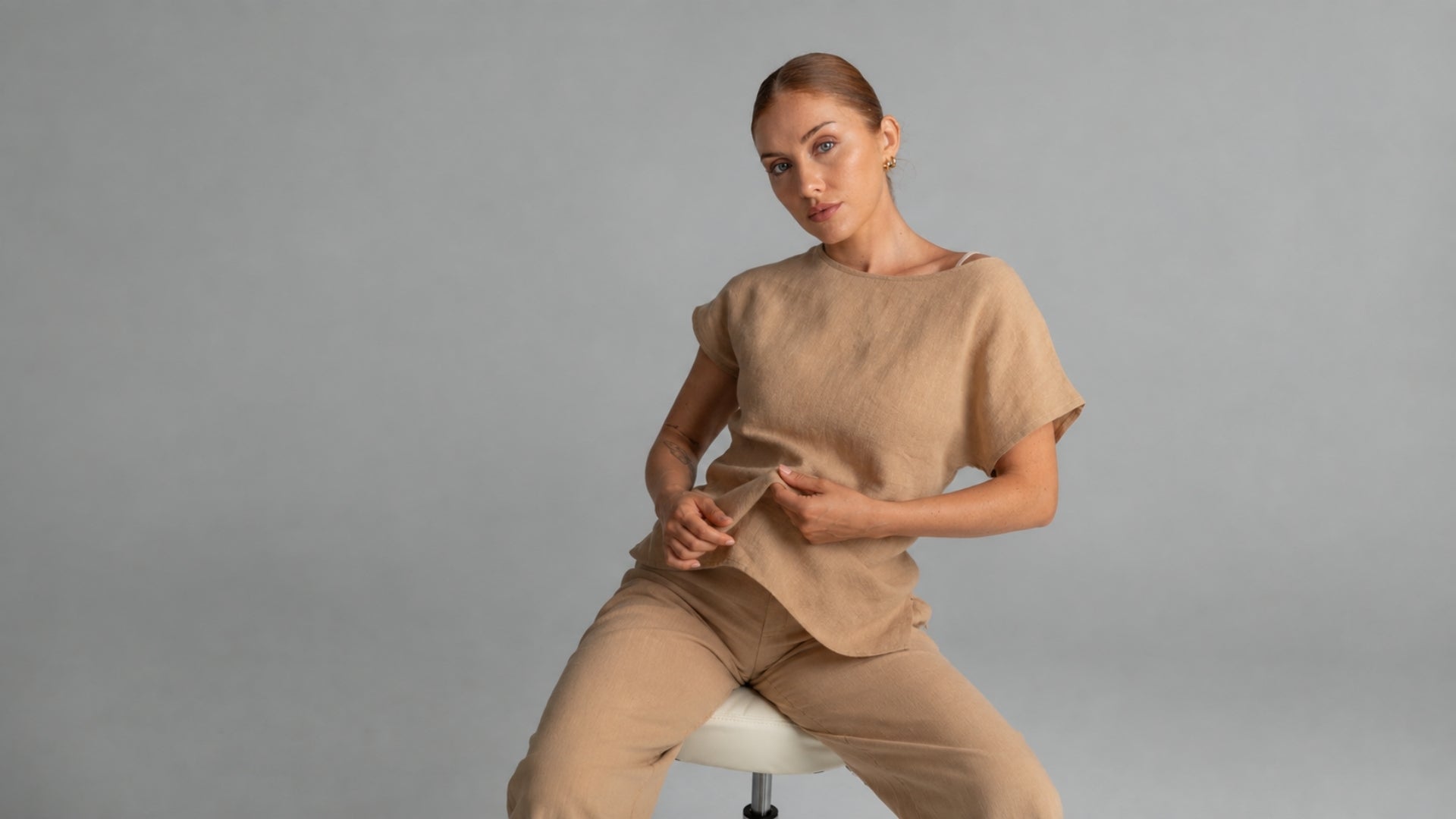
Natural or synthetic. A performance blend gives you stretch, durability and easy care. A natural fibre gives you breathability and a garment that softens with wear. Our Signature range is 92% polyester and 8% spandex, and our linen range is organic linen-cotton, real flax rather than the faux linen used across the rest of the market.
Most teams end up with both, using performance fabric for clinical and colour work and linen for spa days and front of house.
What should you look for in the fit?
Four checks, all of which you can do while wearing the garment.
Lean forward. Does the neckline gape? This is the most common failure and the one a therapist will manage all day if you get it wrong.
Reach across. Does the hem ride up, and does anything pull across the back? Hairdressing and facials are both worked with arms up.
Look at the shoulder seam. It should sit on the edge of the shoulder, not out on the arm. If it is wrong, nothing below it hangs correctly.
Sit down. Nail and lash work are done seated, and a tunic that is comfortable standing can be entirely different in a chair.
Sizing itself deserves attention. Generic small, medium and large is a manufacturing convenience, not a fit, and every Spring Spa Wear style is cut as a tailored fit in sizes 4 to 26 for exactly this reason. Whatever range you choose, collect measurements from your team rather than the size they usually buy, because grading varies significantly between brands.
How do you choose a colour?
Start with the room, then the practicalities, then the trend, in that order.
Black remains the working default across most of the industry. It conceals product between clients, reads as professional in any setting, and photographs well. The only question is colourfastness.
Neutrals such as oatmeal, chocolate, cinnamon and grey suit spa and natural settings where black feels severe. They also coordinate more easily across a mixed range.
White looks immaculate and is unforgiving. It suits clinical and medi-spa work where treatments are cleaner, and it demands a stricter replacement schedule.
Colour as a signal. Larger teams sometimes use different colourways to distinguish roles or departments. It works, provided the styles stay consistent.
One rule regardless of what you choose. Buy one colour in quantity rather than several in small numbers. Three people in three colours looks unplanned. Three in one colour looks like a decision.
How many uniforms does each person need?
Three complete sets, minimum. One worn, one in the wash, one clean and ready.
Two is where most salons start and it fails the first week a load does not dry. Four is worth it for anyone working back-to-back days or travelling between locations.
There is a second reason beyond logistics. Rotating evenly across three sets means they wear and fade at the same rate, so the team keeps matching. Buying one and adding more later is how a range ends up in three tones of the same colour, because dye lots shift between production runs and the difference is visible even when it is small.
Budget for aprons separately. A linen apron over the top during colour, clay or body work is far cheaper to replace than the tunic underneath it, and it extends the life of the whole range.
What changes when you are buying for a team?
Consistency becomes the governing constraint.
One silhouette across the team. Repetition is what makes clothing read as a uniform. You can vary colour by role, but varying the shape defeats the purpose.
Order in one go. Same production run, same dye lot, same tone.
Include front of house. Reception is the first person a client meets and is frequently forgotten. They do not need the same garment, but they should look like the same business, and a dress or a coordinating linen piece usually solves it.
Include the men on your team. A single male therapist in something that does not match the range is conspicuous. Our men's linen shirt is made from the same fabric as the women's linen styles for this reason.
Let people order their own size. Collect measurements, but do not make anyone disclose numbers to a manager if they would rather not.
Write the standard down. Shoes, nails, hair and jewellery are all part of how a team reads, and expectations that live only in the owner's head get applied inconsistently.
What are the most common mistakes?
Buying on the photograph. Fabric weight, hand and recovery are invisible on a screen and are the things you will notice every single day.
Buying one set. The single most common and most expensive error, for all the reasons above.
Ignoring the treatments you actually do. A beautiful uniform that cannot survive tint is not a beautiful uniform.
Choosing for yourself rather than the team. You may love a sleeveless style, and someone on your team may not want bare arms at work. Coverage preferences are personal and worth asking about.
Forgetting the room. Salons redecorate and leave the uniforms behind, which is how a warm natural space ends up with clinical white tunics in it.
Chasing a trend. A palette chosen because it suits your brand ages far better than one chosen because it was current.
What should you ask a supplier?
Six questions that separate a considered range from a catalogue.
- What is the fabric composition, and what does it do that a standard one does not?
- What is the full size range, and is it graded properly or scaled from one pattern?
- Is the black colourfast against bleach and tint, and what is the honest limit of that claim?
- Can I get a sample before committing a whole team?
- What is the lead time on a reorder, and will the colour match what I have?
- Who designed it, and have they worked in a treatment room?
That last one matters more than it sounds. Almost every detail that makes a uniform workable, whether hem length, neckline behaviour, pocket placement or where a seam sits, comes from having stood in one for twelve hours rather than having researched it.
Questions we're often asked
How do I choose uniforms for my salon?
Start with the treatments your team performs and what those involve, so oil, tint, water, heat and arms raised. That determines the fabric. Then check fit by leaning, reaching and sitting in the garment. Choose colour to suit your room rather than a trend, and buy three complete sets per person in one order.
What fabric is best for salon uniforms?
It depends on the work. A performance blend with four-way stretch and good recovery suits clinical, colour and high-movement work, and should be bleach resistant if your team handles tint or lightener. Organic linen-cotton suits spa and natural settings because it breathes and softens with wear. Many salons run both.
How many uniforms should each staff member have?
Three complete sets minimum, one worn, one washed, one ready, and four for anyone working back-to-back days. Buying all three at once matters as much as the number, because dye lots shift between production runs and later additions will not match.
Should a whole team wear the same uniform?
The same silhouette, yes. Repetition is what makes clothing read as a uniform rather than as staff clothing. Colour can vary by role or department, but varying the style across a team looks unplanned even when each garment fits well.
What colour uniform is best for a beauty salon?
Black is the practical default because it conceals product between clients and reads as professional anywhere, and the key consideration is whether it is colourfast. Neutrals suit spa and natural rooms where black feels severe. Whatever you choose, buy one colour in quantity rather than several in small numbers.
How do I know if a uniform fabric is good quality?
Hold it up to the light to check weight and opacity, then stretch it and watch whether it springs back or stays where you left it. Thin fabric and poor recovery are the two failures you notice daily, and neither is visible in a product photograph.
Browse Spa Uniforms, Linen Uniforms, Scrubs and Bleach Resistant Uniforms, tailored sizes 4 to 26.

Why Our Uniforms Come in Sizes 4 to 26, Not Small, Medium and Large
Why One Uniform Has to Handle Every Treatment You Offer