
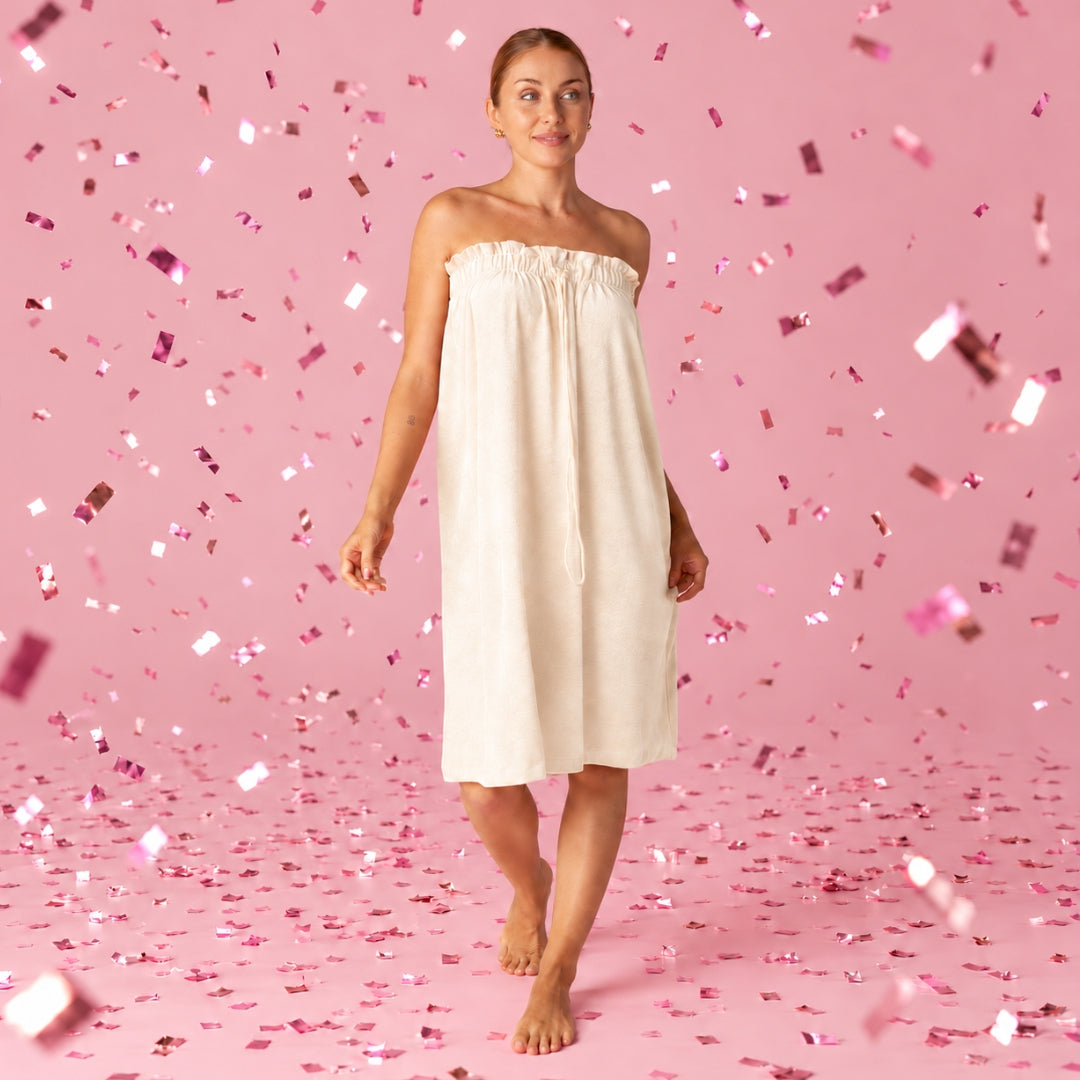

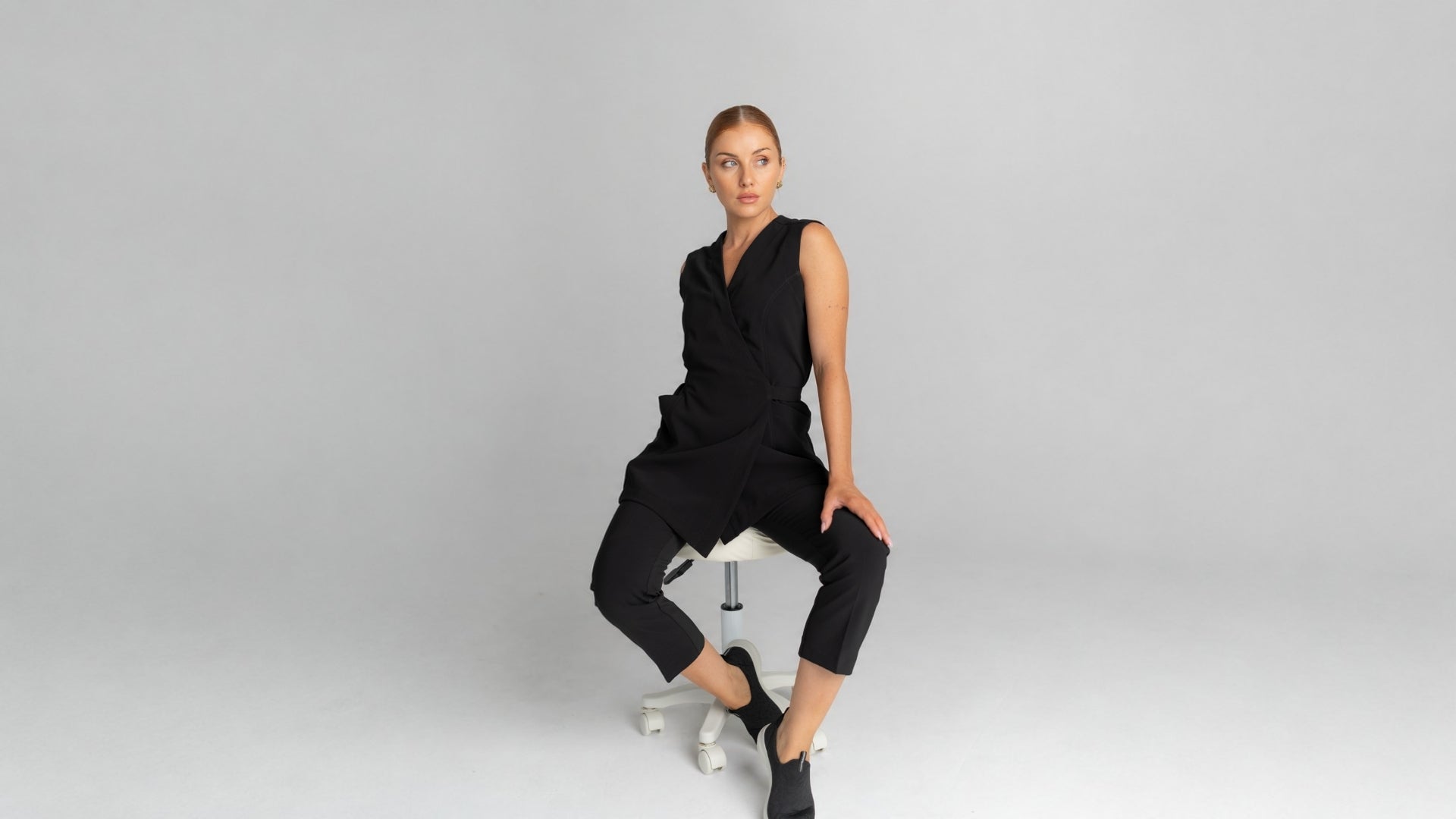
We believe a uniform should keep up with the range of work a beauty therapist actually does. Nobody spends a day doing one treatment. You wax at nine, do a facial at eleven, a body treatment after lunch and a set of lashes before close, and one garment has to survive wax, oil, clay, tint, steam and product across all of it. So we design for the whole day rather than a single treatment, in fabrics that take the punishment and a tailored fit in sizes 4 to 26.
In this article
- What does a beauty therapist's uniform actually go through?
- Which fabric survives a full treatment menu?
- Sleeveless, short sleeve or long?
- Why the neckline matters more than anything else
- When should you wear an apron?
- Which styles suit beauty therapy work?
- When should a beauty therapist wear scrubs instead?
- Questions we're often asked
What does a beauty therapist's uniform actually go through?
More than almost any other role in the industry, because the treatment list is so wide.
Wax. Hot, sticky, and the one thing that genuinely does not come out of most fabrics. Strip wax on a sleeve is usually the end of that garment.
Oil and massage balm. Absorbed rather than sat on the surface, which is why oil marks show up after washing rather than at the time.
Clay, mud and exfoliants. Messy, and they land on the front of a garment at hip height where you lean against the bed.
Tint and pigment. Brow and lash tint stains permanently, and it travels further than you expect.
Steam and heat. A facial room runs warm and humid. Whatever you are wearing has to breathe or you will feel it by the third client.
Movement. Leaning over a bed, working at the head end with arms raised, sitting for detailed work, standing for waxing.
Add a wash cycle at the end of every day and you have a garment being asked to do considerably more than a uniform in almost any other industry.
Which fabric survives a full treatment menu?
Two answers, and plenty of therapists run both.
A performance blend for the messier, more clinical end of your list. Our Signature fabric is 92% polyester with 8% spandex, giving four-way stretch, breathability, wash-and-wear, and enough build to hold its shape through daily laundering. Black is bleach resistant, which matters if you do brow tint or work anywhere near colour.
What to look for regardless of brand is enough weight to be fully opaque, stretch that actually recovers rather than bagging out, and a smooth face that sheds rather than collects.
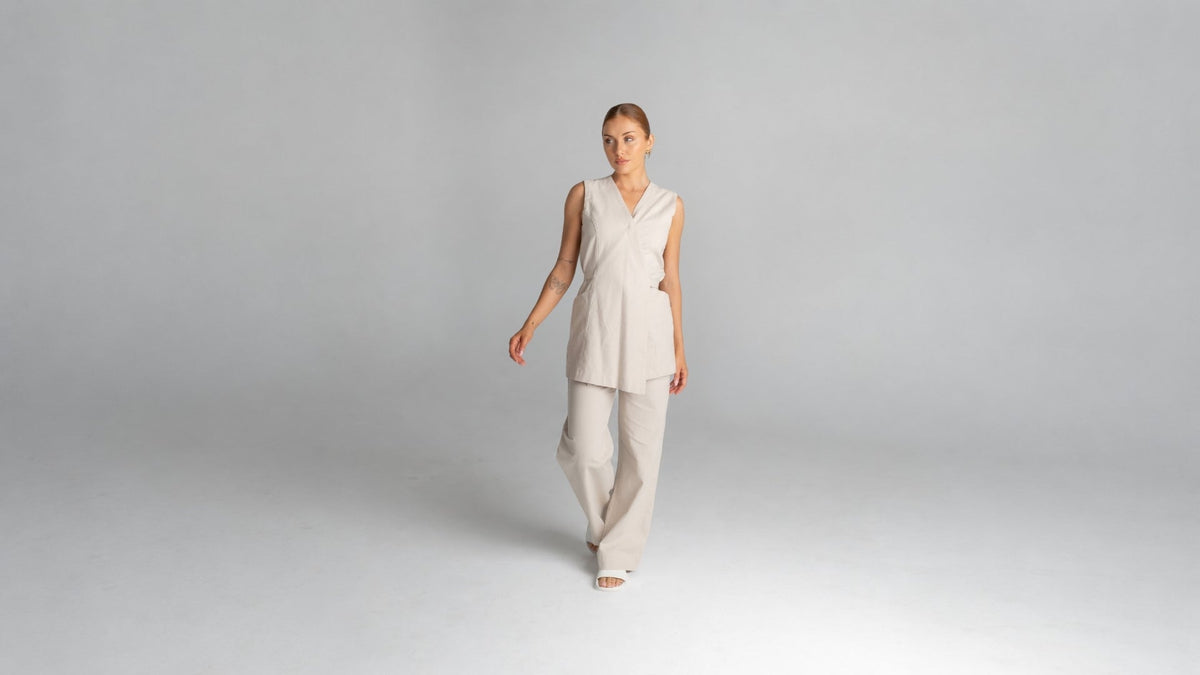
Organic linen-cotton for facials, massage and anything where the room is meant to feel calm. Real flax breathes in a way polyester cannot, carries moisture away from the skin, and softens with every wash rather than pilling. It also drapes rather than holding a rigid clinical shape, which changes how a treatment room reads.
Ours is the only organic linen-cotton uniform range in Australia, because every other range on the market uses faux linen, which is polyester woven to look like flax. In a warm facial room the difference is not subtle.
Linen creases more. That is the trade, and stonewashing softens it into texture rather than sharp folds.
Sleeveless, short sleeve or long?
This is more personal than most uniform decisions, and it is worth asking your team rather than deciding for them.
Sleeveless gives full freedom through the shoulders and is what most therapists choose for massage and body work. Nothing drags across a client, nothing bunches at the elbow. The Fleur Linen Tunic and Spa Uniform 17 are both sleeveless.
Short sleeve or cap sleeve is the middle ground and the most common choice across a mixed treatment list. It keeps you cool without bare arms.
Three-quarter sleeve gives more coverage without the sleeve reaching into a treatment. The Spa Uniform 15 is cut this way.
Coverage preference is genuinely personal. Some therapists are not comfortable with bare arms at work, and a uniform someone feels self-conscious in is one they will quietly avoid wearing. If you are ordering for a team, offer a choice of sleeve within the same style and colour, so the silhouette stays consistent and everybody is comfortable.
Why the neckline matters more than anything else
Because of the angle you work at.
Beauty therapy is done leaning forward over a bed, often with a client lying directly below you looking up. A neckline that gapes in that position is the single most common complaint we hear, and it is entirely a fit and design problem.
The consequence is not just discomfort. A therapist who knows her neckline gapes will manage it all day, one hand adjusting between every step of a treatment. That is attention taken away from the client, every appointment, for as long as she owns the garment.
Three things solve it. A wrap front with a secure tie, like the Spa Uniform 12, which holds its position. A higher round neckline, like the Spa Uniform 09. Or a proper tailored fit through the shoulder and bust, which is why generic sizing fails here more visibly than anywhere else.
Test it before you commit a team. Put the garment on, lean forward as if over a bed, and look in a mirror.
When should you wear an apron?
For anything involving clay, oil, wax or tint, which is to say, most of a beauty therapist's week.
The economics are straightforward. A linen apron costs a fraction of a tunic and takes the contact instead of it. Over a year it will save you at least one garment, probably more.
The Mia Linen Half Apron sits at the waist and suits seated work and lighter treatments. The Lulu Linen Apron gives fuller coverage for body treatments and colour. Both have front pockets, which is more useful than it sounds when you are mid-treatment and do not want to turn away from a client.
They also layer over anything, so one apron works across your whole range regardless of what you are wearing underneath.
Which styles suit beauty therapy work?
The full range is in Beauty Salon Uniforms, but these are the ones therapists come back to.
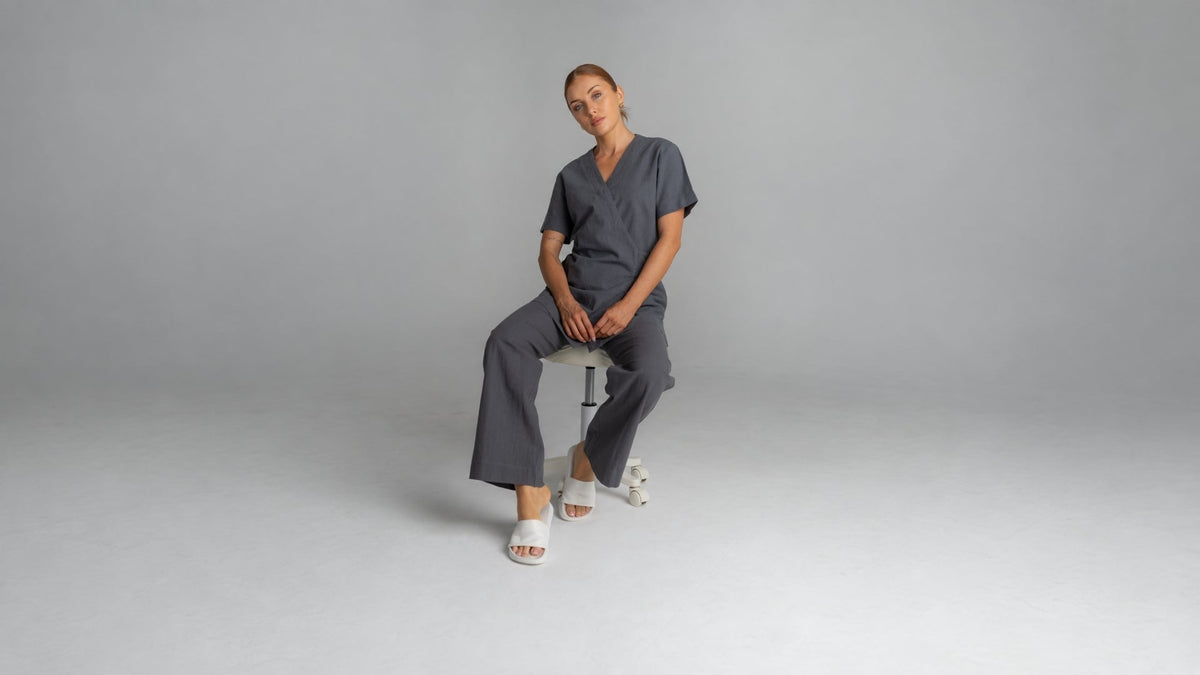
Spa Uniform 12, our strongest seller across the whole business. Wrap front with a secure back tie and an invisible bust closure, so nothing shifts while you work. Black, Charcoal Grey and Navy.
Spa Uniform 14, an abstract V-neck and cap sleeves, a softer line than a standard tunic. Five colourways.
Spa Uniform 09, a round neckline and clean front, designed to pair with the Spa Pants 03 crop pant.
Eden Linen Tunic, our best-selling linen style. Wrap front, relaxed fit, short sleeves, in organic linen-cotton.
Bottoms. Long Pants year-round, Capri Pants through summer, or Willow Linen Pants to match a linen tunic.
Every one is cut as a tailored fit in sizes 4 to 26.
When should a beauty therapist wear scrubs instead?
When the work is clinical enough that the uniform should say so.
Dermal therapy, skin needling, peels, laser and injectables all sit closer to a clinic than a spa, and a scrub signals competence in that context in a way a soft tunic does not. Clients reading you as clinical is part of what they are paying for.
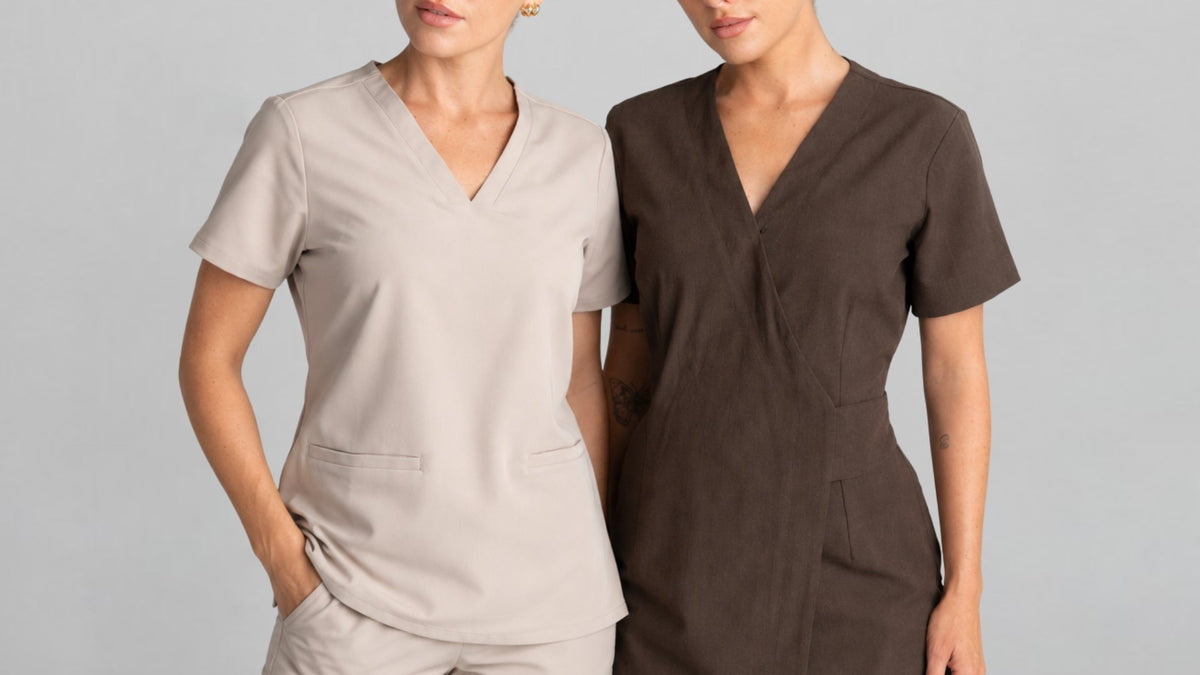
Plenty of therapists now run both, wearing scrubs on clinical days and linen on spa days, in colours that coordinate so the business still looks like one business. Our SpringActive™ range comes in Oatmeal specifically because it sits alongside the linen range rather than clashing with it.
If most of your list is facials, waxing, massage and body treatments, a tunic remains the better answer.
Questions we're often asked
What do beauty therapists wear in Australia?
Most Australian beauty therapists wear a professional tunic with tailored pants, in black or a neutral. The practical requirements are a fabric that survives wax, oil, clay and tint, a neckline that does not gape when leaning over a treatment bed, and freedom through the shoulders. Many therapists now add scrubs for clinical treatments.
What is the best fabric for a beauty therapist uniform?
A performance blend with four-way stretch and good recovery suits the messier and more clinical treatments, and should be bleach resistant in black if you do brow tint. Organic linen-cotton suits facials, massage and spa settings because it breathes properly in a warm room and softens with every wash.
Should beauty therapists wear sleeveless uniforms?
Sleeveless gives the most freedom through the shoulders and is the usual choice for massage and body work, since nothing drags across a client. It is a personal preference though, because many therapists prefer coverage, and a team is better served by offering a choice of sleeve within the same style and colour.
How do you stop a uniform neckline from gaping?
Choose a wrap front with a secure tie, a higher round neckline, or a properly tailored fit through the shoulder and bust. Test it by putting the garment on, leaning forward as if over a treatment bed, and checking in a mirror before committing to a whole team.
Do beauty therapists need aprons?
For clay, oil, wax and tint work, yes. An apron costs a fraction of a tunic and takes the contact instead of it, so it pays for itself across a year. A half apron suits seated and lighter treatments, and a full apron suits body treatments and colour.
Should a beauty therapist wear scrubs or a tunic?
A tunic suits facials, waxing, massage and body treatments. Scrubs suit dermal therapy, peels, laser and injectables, where the work is clinical and the uniform should signal that. Many therapists run both and coordinate the colours so the business still reads as one.
What size range do beauty therapy uniforms come in?
Spring Spa Wear uniforms are cut as a tailored fit in sizes 4 to 26 rather than generic small, medium and large, and scrubs run XS to 4XL. Tailored grading matters in treatment work because the garment has to sit correctly through the shoulder and waist while bending and reaching.
Browse Beauty Salon Uniforms, Linen Uniforms, Linen Aprons and Scrubs, tailored sizes 4 to 26.

How to Choose Uniforms Your Team Will Actually Want to Wear
Why Most Uniforms Fail in a Hair Salon