

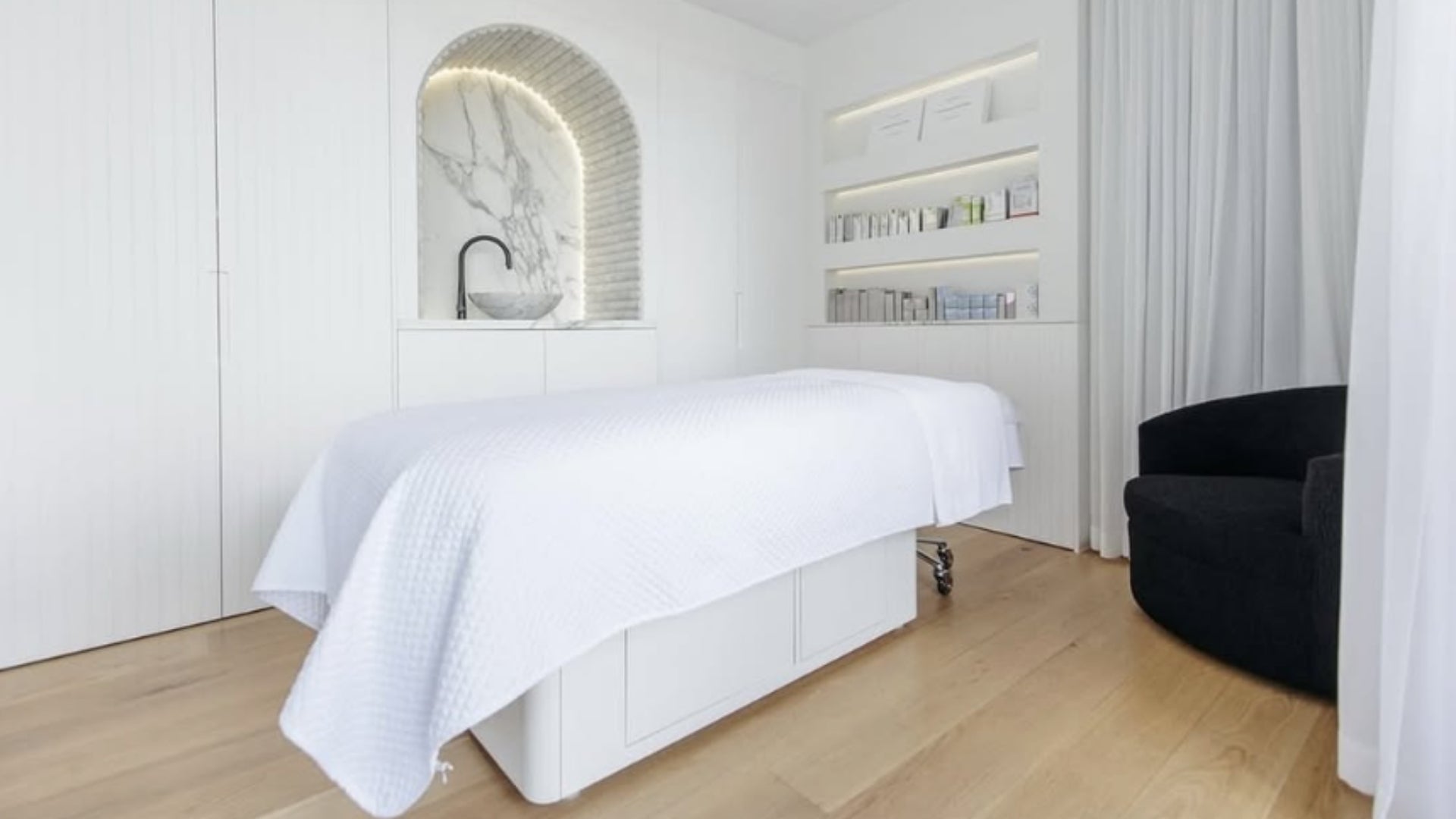
We believe a treatment bed should look as considered as the rest of your room. For years it could not, because the only linen available was domestic bedding or massage table sheets pressed into service, bunching at the corners, gaping at the foot, and looking exactly as makeshift as it was. So we designed a range cut specifically for treatment beds, in fabric that dries in seven minutes and holds its colour through commercial laundering. Still the only range of its kind in Australia.
In this article
- What is the difference between a treatment bed and a massage table?
- What linen does a treatment room actually need?
- What is a bed valance, and does a spa need one?
- How many sets of spa bedding should you own?
- What fabric is best for spa bed linen?
- How often should spa bedding be washed and replaced?
- Questions we're often asked
What is the difference between a treatment bed and a massage table?
They are not the same piece of furniture, and this is the single reason most spa linen fits badly.
A massage table is narrower, usually portable, and often has no base, because the legs are open underneath. A treatment bed is wider, fixed, taller, and typically has a solid or upholstered base running to the floor. Many also have a lift mechanism, a wider face hole, or a shaped head end.
Most linen sold in Australia as spa bedding was cut for a massage table. On a treatment bed it sits short, pulls at the corners, and leaves the base exposed, which is why so many otherwise beautiful treatment rooms have a bed that lets them down.
Ours is cut for treatment beds. It is a small distinction that changes how an entire room reads, and it is the reason therapists who have used both notice the difference immediately.
What linen does a treatment room actually need?
Five things, and they do different jobs.
A fitted sheet goes directly onto the bed and stays put. Ours come in packs of five, and in a face hole version for prone treatments, meaning a proper opening rather than a gap a client has to arrange themselves around.
A flat sheet covers the client. Flat sheets also work as a modesty layer under a blanket in cooler months.
A bed cover sits over the top and takes the wear. A cover is the layer that meets the oils and product, and it is far quicker to change between clients than a full strip-down.
A face cradle cover protects the one part of the bed a client puts their face into. These come in twos because you will always want a spare.
A valance finishes the bed to the floor and hides the base, the lift mechanism and whatever is stored underneath.
Pillow cases complete a set, in the same fabric so a bed reads as one piece rather than an assembly.
What is a bed valance, and does a spa need one?
A valance is a skirt that runs from the top of the bed to the floor, concealing the base.
It is the piece most Australian salons have never been offered, because we remain the only supplier of them here. It is also, treatment for treatment, the single item that most changes how a room looks. A bare bed base, with its brackets, its wiring, its stacked boxes of stock, is usually the least considered thing in an otherwise calm room. A valance removes all of it in one movement.
Ours are made with a face hole and small slits at the foot, so a face cradle can be fitted without lifting the whole thing off.
If you are refreshing a treatment room and can only change one thing, change this.
How many sets of spa bedding should you own?
Two to three complete sets per treatment bed.
Two is workable. Three is comfortable, and it is what I would recommend to any clinic running a full day. One set on the bed, one in the wash, one clean and ready means a delayed load never affects a booking.
It also lets you rotate colours. A room can be reset for a season, or a particular treatment, simply by changing the linen, which is a far cheaper refresh than anything involving paint.
Through summer you will want the extra set. Clients perspire more, treatments run warmer, and linen needs changing more often than the schedule suggests.
What fabric is best for spa bed linen?
The honest answer is that it depends on what you value, and the two real options behave quite differently.
Microfibre is what most busy clinics choose, and it is what our sheets are made from. It is light, tightly woven, holds colour through repeated commercial washing, and dries extremely fast, with our sheets drying in about seven minutes. In a clinic turning over linen daily, that number matters more than almost anything else on the spec sheet. It also resists the oil staining that ruins natural fibre.
Cotton feels more luxurious against skin and breathes better, which suits a slower, high-end treatment room. It also absorbs oil, takes far longer to dry, and shows staining sooner.
Most Australian clinics land on microfibre for the working sheets and use natural fibre where the client actually feels it. There is no wrong answer, only a trade between hand feel and turnaround.
How often should spa bedding be washed and replaced?
Sheets and covers are changed between every client. That is not negotiable, and it is the reason set numbers matter.
Valances do not touch a client, so they are washed weekly or when marked.
On washing, keep it cool, skip the fabric softener, because it coats microfibre and destroys the wicking that makes it dry quickly, and wash bedding apart from towels, which shed lint that transfers.
On replacement. Plan to replace bed linen annually in a busy room. Think about how many clients have lain on a set across a year. If a sheet smells faintly of oil after washing, or has visible staining, a client will notice both before you do.
This is where buying two or three sets pays for itself. Rotating across sets spreads the wear, and the whole range lasts considerably longer than a single set worked to death.
Questions we're often asked
What is the difference between spa bedding and massage table linen?
Treatment beds are wider, taller and usually have a solid base running to the floor, where massage tables are narrower, often portable and open underneath. Most linen sold as spa bedding in Australia was cut for massage tables, so it sits short on a treatment bed and leaves the base exposed.
What is a spa bed valance for?
A valance is a fitted skirt that runs from the top of a treatment bed to the floor, concealing the base, the lift mechanism and anything stored underneath. Spring Spa Wear is the only Australian supplier of spa bed valances. Ours are made with a face hole and slits at the foot so a face cradle can still be fitted.
How many sets of spa bedding do I need per bed?
Two to three complete sets per treatment bed. One on the bed, one in the wash and one ready means a delayed load never affects a booking. Three sets are recommended for clinics running full days, and for the warmer months when linen is changed more often.
How quickly does spa bed linen dry?
Spring Spa Wear microfibre sheets dry in approximately seven minutes. Fast drying is the most useful property in a busy clinic, because it is what allows linen to be turned around between clients without holding several extra sets.
How often should spa bedding be replaced?
Sheets and covers should be washed between every client and replaced roughly annually in a busy treatment room. Staining, or a faint oil smell that survives washing, means a set is past its life, and a client will notice both before you do.
Can spa bed linen be washed in a normal machine?
Yes. Wash cool, on a normal cycle, apart from towels, and skip fabric softener, because it coats microfibre and blocks the wicking that makes it dry quickly. A domestic machine and dryer handle the range without any special treatment.
See the full Spa Bedding collection, or browse Massage Table Sheets and our Massage Therapist Uniforms & Supplies range.


Why Copper Has Been Used in Pedicure Rooms for Centuries
How Mukti Organics Dressed a Team to Match the Brand