
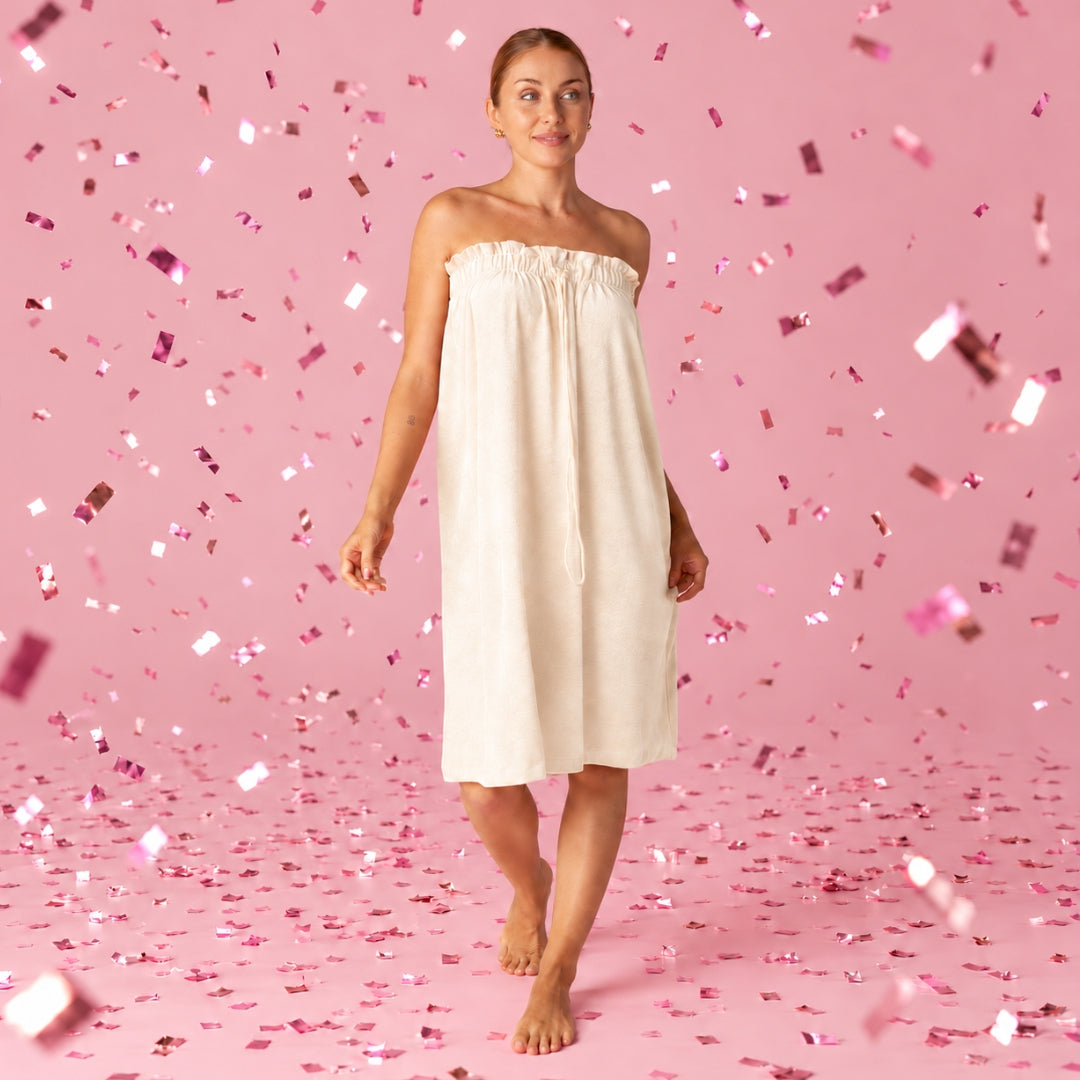

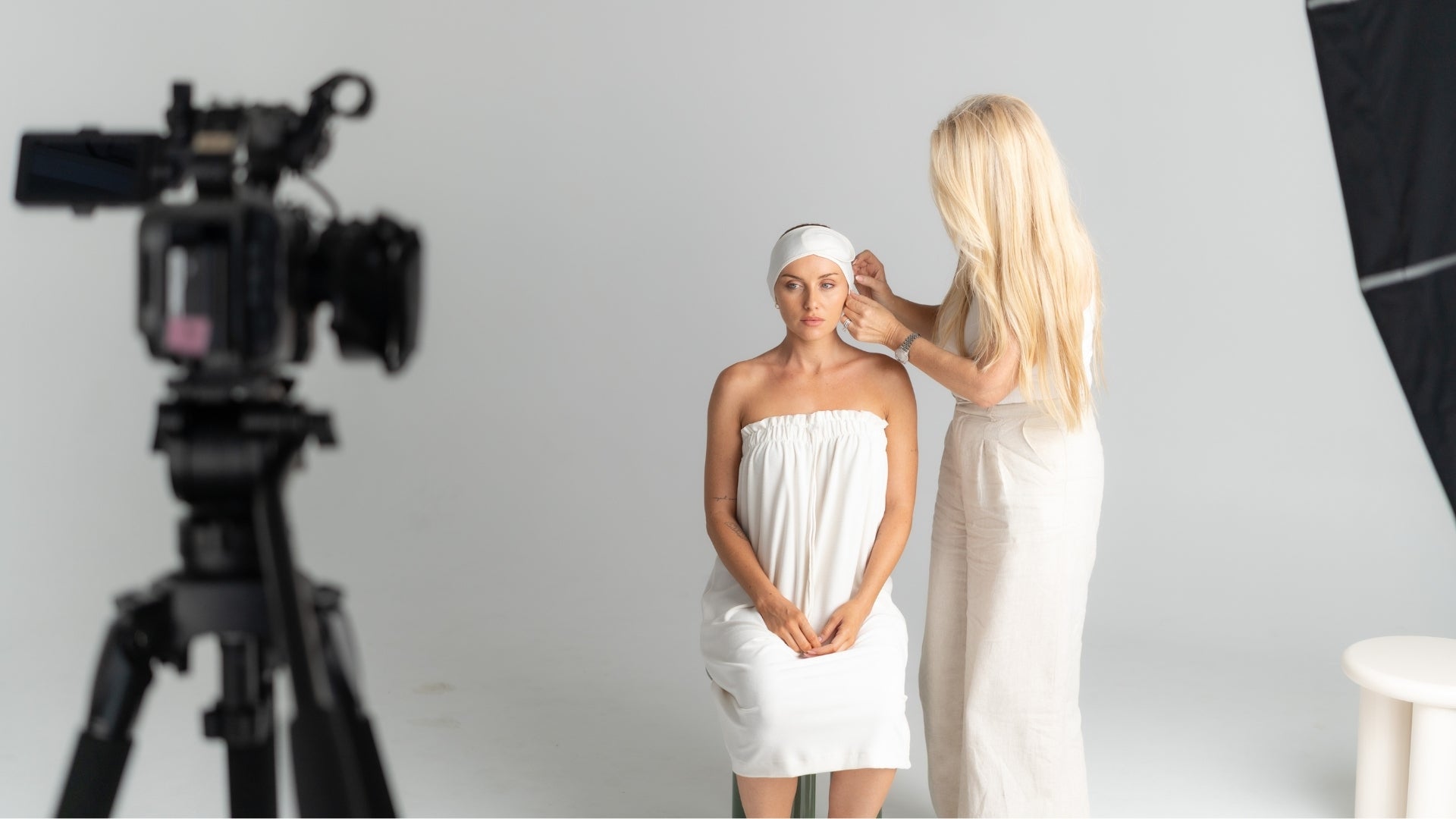
I started Spring Spa Wear because I could not buy what I needed. After years running my own salons I had reached the point of pure frustration with the styles, colours and fabrics available to therapists, because everything either looked professional and felt awful, or felt comfortable and looked like a hospital. So in 2007 I set out to design uniforms that did both, tailored in sizes 4 to 26, breathable, and easy to wash and wear. Everything we have made since has come from that same room.
In this article
- Why did a beauty therapist start a uniform label?
- Why does presentation matter so much in this industry?
- What does a uniform include besides the clothes?
- What do I design for that other brands do not?
- Why did we start making bedding as well?
- Questions we're often asked
Why did a beauty therapist start a uniform label?
I have spent more than three decades in this industry, and most of it on the floor.
I owned and ran two day spas in Sydney, one in Burleigh Heads, and a spa villa in Canggu, Bali. I employed teams, I trained therapists, and I did treatments myself. I know what a twelve-hour day does to a garment because I have finished plenty of them.
What I could not do was dress my staff properly.
The uniforms available then came in two kinds. There were the clinical ones, stiff, unflattering, cut to a rough average and available in whatever colour the supplier had ordered. And there were the pretty ones that fell apart, faded, or could not survive a wax pot.
Nothing was designed by someone who had actually worked a treatment. You could tell.
So in 2007 I started designing them myself. Not as a business plan, but as a solution to a problem I had every single day.
Why does presentation matter so much in this industry?
Because we sell an experience, and the experience begins before a word is spoken.
A client walks in and forms an impression of your business in a few seconds. They read the room, and they read your team. If your therapists look considered, the treatment feels considered before it starts. If they look thrown together, a client wonders what else is.
This is not vanity. A uniform is one of the very few things in a salon that speaks to every client, every day, without anyone having to do anything. It is the cheapest marketing you own and the most consistently overlooked.
There is a second reason, and I care about it more.
A uniform tells your team what you think of them. A therapist who feels good in what she is wearing carries herself differently through a shift. She is not adjusting a neckline between clients or worrying that a hem has ridden up. She is doing her job.
I have watched a uniform change how a team behaves. It is not a small thing.
What does a uniform include besides the clothes?
More than most owners write down.
A uniform does not stop at the garment. It extends to the cleanliness of the shoes, the colour of the nail polish, the way hair is pulled back, and the jewellery and accessories worn with it. All of it is read by a client, and all of it either supports the image of your business or quietly undermines it.
My advice to any owner is to decide what you want and then write it down. Not as a rulebook, but as a standard. Teams follow a clear standard willingly, and they resent an inconsistent one, and inconsistency is what happens when expectations live only in the owner's head.
The other half is enforcing it kindly and consistently. A standard that applies on some days and not others is worse than no standard, because it teaches your team that it does not really matter.
What do I design for that other brands do not?
The work itself. Every decision in our range came out of something that annoyed me on a salon floor.
Tailored sizing, 4 to 26. Not small, medium and large. A therapist bends over a bed for hours, and a garment sized to an average does not sit right on anyone. We cut every style as a tailored fit so it stays where it should through the shoulder and waist.
Fabric that survives what we do to it. Oils, wax, tint, lotion, and a wash after every shift. That is why our black range is bleach resistant, and why we developed our own fabrics rather than buying whatever a mill was selling.
Length that stays put. Tops cut longer so they do not ride up when a therapist reaches across a bed. It sounds minor until you have spent a day pulling a hem down.
Aprons for the messy treatments. A linen apron over the top during a body treatment or a colour is far cheaper to replace than a tunic.
Real linen, not faux. When the industry moved to polyester made to look like linen, we went the other way and sourced organic linen-cotton. It breathes, it softens, and it is the only range of its kind in Australia.
And none of it is guesswork. We test on real therapists doing real treatments, and when someone tells us a neckline gapes or a hem rides up, we change it. That is the advantage of being a therapist who designs rather than a designer who researched therapists.
Why did we start making bedding as well?
The same frustration, in a different part of the room.
Your treatment bed is the largest single object a client sees, and the one they spend the entire appointment lying on. For years the only linen available was domestic bedding pressed into service, ill-fitting, bunching at the corners, and looking exactly as makeshift as it was.
So we designed a range specifically for treatment beds. Not massage tables, but treatment beds, which are a different shape and are what most Australian spas and clinics actually use. Fitted properly, in colours that suit a room, and quick enough to turn around that a busy clinic can keep up.
You can see the whole range in our Spa Bedding collection. It remains one of the parts of the business I am proudest of, because it solved something nobody else had bothered to look at.
Questions we're often asked
Who founded Spring Spa Wear?
Spring Spa Wear was founded in 2007 by Leanne Spring, a beauty therapist with more than three decades in the industry. She owned and ran two day spas in Sydney, one in Burleigh Heads and a spa villa in Canggu, Bali, before starting the label to design uniforms she could not buy anywhere else.
Why do salon staff wear uniforms?
A uniform gives a client a consistent, professional impression before any conversation begins, reinforces the salon's branding, and identifies staff clearly. It also matters to the team wearing it, because a therapist who is comfortable and feels well presented works without distraction across a long shift.
What should a salon uniform policy cover?
Beyond the garment itself, a uniform policy should set expectations for footwear and its condition, nail polish, how hair is worn, and jewellery and accessories. Write the standard down and apply it consistently, because an inconsistent standard teaches a team that it does not matter.
What size range do Spring Spa Wear uniforms come in?
Tailored sizes 4 to 26, not generic small, medium and large. Every style is cut as a tailored fit so the garment sits correctly through the shoulder and waist while a therapist bends, reaches and works over a treatment bed.
Browse our Spa Uniforms, Linen Uniforms and Spa Bedding, designed by a therapist, in sizes 4 to 26.


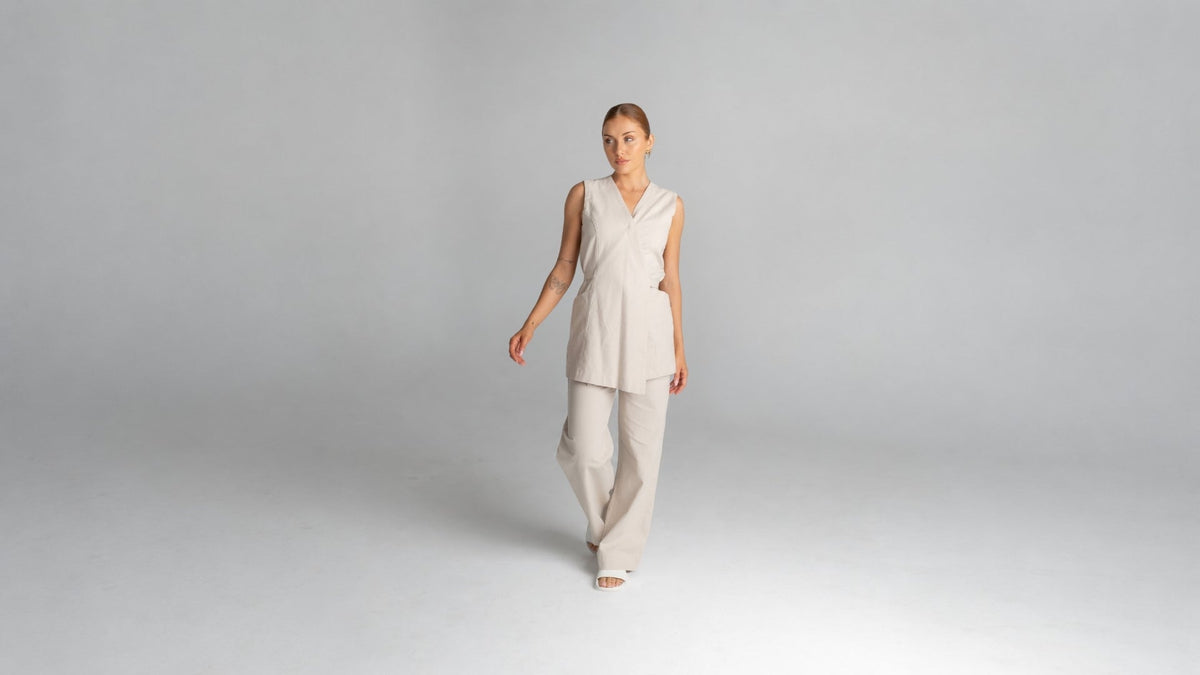
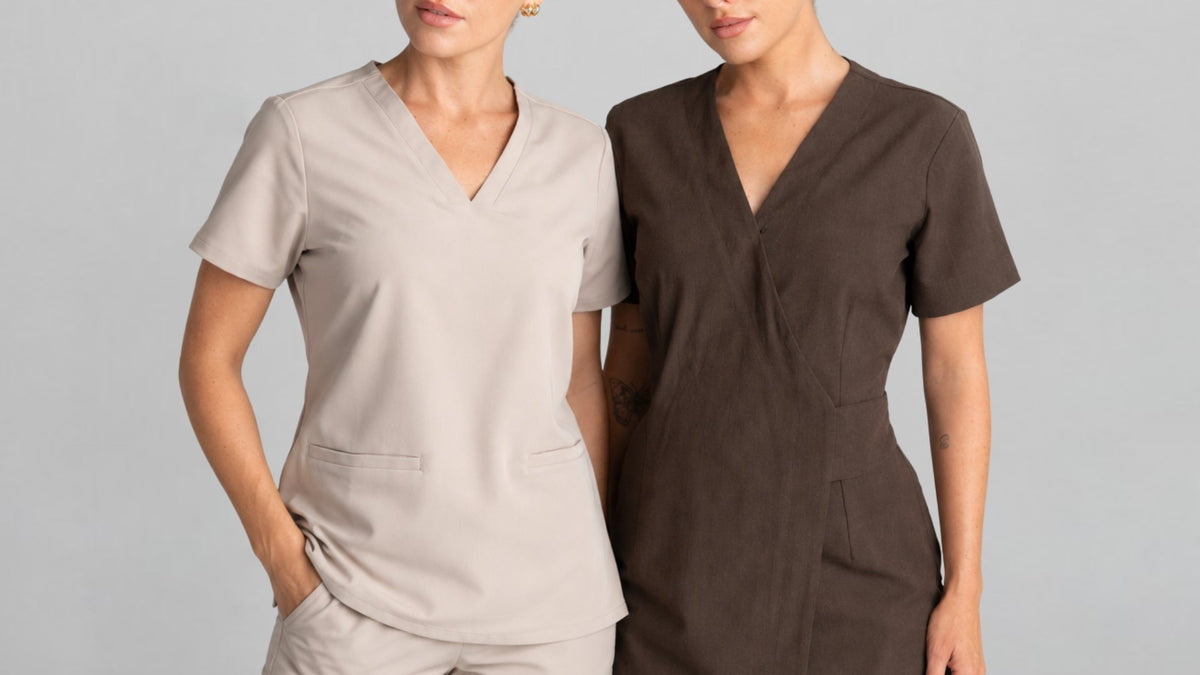
What Actually Ruins a Uniform, and How to Prevent It